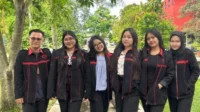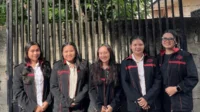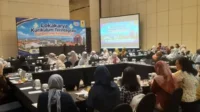
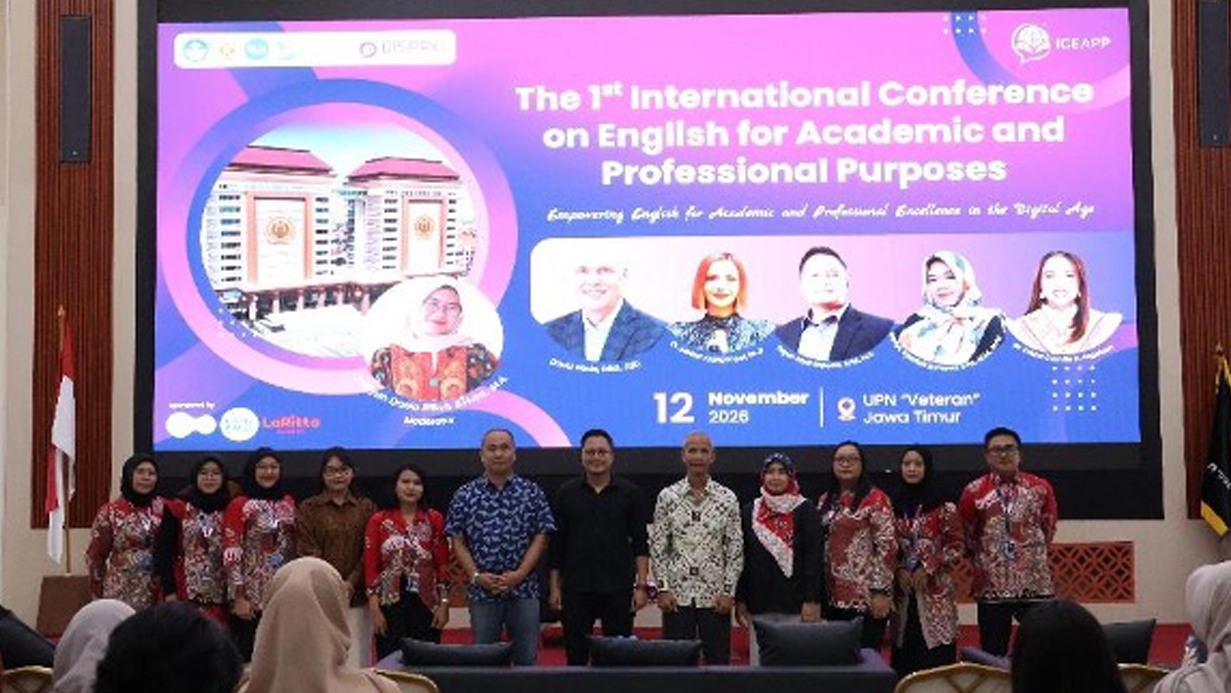

SURABAYA, November 12, 2026 – Universitas Pembangunan Nasional “Veteran” Jawa Timur successfully held the 1st International Conference on English for Academic and Professional Purposes (ICEAPP) under the theme “Empowering English for Academic and Professional Excellence in the Digital Age” on Thursday, November 12, 2026. The international conference took place at the Twin Tower Ballroom, UPN “Veteran” Jawa Timur, Surabaya, using a hybrid format that combined onsite and online participation and was also broadcast live through UPN TV’s YouTube channel. The event brought together 127 student participants from the English for Business and Professional Communication (BISPRO) program, representing the 2024, 2025, and 2026 cohorts, along with 53 paper presenters who participated both onsite and online.
The conference was organized as a platform to encourage academic discussion, research exchange, and professional collaboration in English language education and communication. As English continues to play an important role in academic and professional environments, the development of relevant language skills and knowledge has become increasingly important in the digital era. Through ICEAPP 2026, participants were given opportunities to explore current issues, exchange research findings, and gain new perspectives from academics, researchers, and professionals from different institutions and countries. The hybrid format also allowed international speakers and presenters to participate despite geographical limitations, making the conference accessible to a wider academic community.
During the opening ceremony, Renta, S.Pd., M.A., Chair of the Organizing Committee, highlighted the importance of diversity and collaboration in creating meaningful academic discussions. She stated, “What makes this conference particularly meaningful is the diversity of our participants. Through ICEAPP 2026, we aim to create a platform for exchanging ideas, sharing research, and strengthening collaboration in the fields of English for Academic and Professional Purposes.”
A similar message was delivered by Dr. Agus Widyarta, M.Si., Vice Dean III of the Faculty of Social, Cultural and Political Sciences at UPN “Veteran” Jawa Timur. He emphasized the role of the conference in supporting academic development and international cooperation. “We believe that this conference provides a valuable platform for researchers, educators, and practitioners to exchange ideas, share research findings, and strengthen international collaboration. With the theme ‘Empowering English for Academic and Professional Excellence in the Digital Age,’ we hope this conference will encourage meaningful academic discussions, strengthen international collaboration, and open new opportunities for future partnerships,” he said.
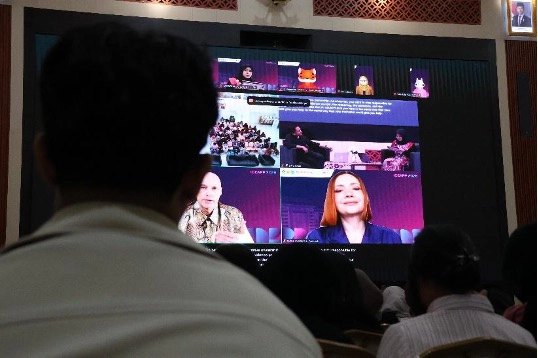
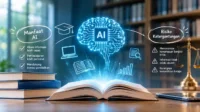
The main session was moderated by Zakiyah Dania Billah, S.Hum., M.A., and featured presentations from keynote, plenary, and invited speakers. The keynote session was delivered by Professor David Wicks, MEd., EdD., from Nanjing University of Information Science and Technology, China. In his presentation titled “Keeping Learners in the Lead,” he discussed how students can use Artificial Intelligence (AI) to support their learning while remaining responsible for their own thinking. He highlighted the importance of meaningful questions, critical thinking, and independent learning, and introduced the QUEST+AI framework, which consists of five stages: Question, Understand, Engage, Solve, and Teach. Through this framework, students are encouraged to develop their own questions, evaluate information, engage in discussions, construct solutions, and explain their learning to others. He emphasized that AI should serve as a learning support tool rather than replace students’ thinking and decision-making abilities.
The plenary session featured Dr. Melisa Ayşegül Çal, Ph.D., from Suan Sunandha Rajabhat University, Thailand, and Dr. Krisha Camille R. Angoluan, Dean of the College of Arts and Sciences at Isabela State University, the Philippines. In her presentation titled “Beyond Fluency in the Age of AI,” Dr. Melisa explored the relationship between AI and authentic human learning. She explained that although AI can help generate ideas, prepare arguments, and produce written content, human thinking, reflection, and judgment remain essential. She introduced an AI literacy workflow that encourages learners to begin with their own ideas, use AI for assistance, and evaluate the results through human judgment. Her presentation highlighted that technology should support human abilities rather than replace them. At the end of her presentation, Dr. Melisa delivered an important message about maintaining human values in the development of technology. She stated, “I am not arguing for less technology. I am arguing for more humanity in the way we use it.” Her statement reflected one of the central messages of ICEAPP 2026: technological development, particularly artificial intelligence, should go hand in hand with human responsibility, critical thinking, and meaningful communication.
Meanwhile, Dr. Krisha Camille R. Angoluan presented “Connecting Theory and Professional Practice: Lessons from Revising an English Language Studies Curriculum.” She discussed the importance of connecting academic theories with practical learning activities, particularly in English language education. Her presentation highlighted how understanding audiences and communication contexts can help students adapt messages and make appropriate language choices. She also emphasized that practical assignments should give students opportunities to apply theoretical knowledge to real communication situations. During the question-and-answer session, she addressed the challenge of establishing stronger connections between course assignments and learning activities, offering valuable insights into curriculum development.
The invited speaker session continued with presentations from Teguh Hadi Saputro, S.Pd., M.A., a lecturer at Universitas Muhammadiyah Malang, Indonesia, and Wahyu Kyestianti Sumarno, S.Pd., M.Ed., M.Pd., a lecturer at UPN “Veteran” Jawa Timur and a Ph.D. candidate at the University of Central Florida, USA. Teguh Hadi presented on designing comprehensible English learning materials based on students’ vocabulary knowledge. He explained how vocabulary assessment can help teachers identify learners’ needs and adapt reading and listening materials to their proficiency levels. He also demonstrated how AI tools, such as ChatGPT and ElevenLabs, can support the development of accessible learning materials. He emphasized that AI-generated materials still need to be reviewed and adjusted to ensure they are suitable for students’ learning needs.
Wahyu Kyestianti Sumarno discussed translanguaging and its role in Indonesian English as a Foreign Language (EFL) education. She highlighted how students can use their full linguistic resources, including English, Bahasa Indonesia, and regional languages, to support understanding, communication, and learning. Her presentation also explored two approaches to translanguaging in the classroom: spontaneous translanguaging, which occurs naturally during interactions, and pedagogical translanguaging, which is intentionally planned to support learning objectives. She emphasized the importance of recognizing Indonesia’s multilingual environment while considering teachers’ concerns about English exposure and institutional expectations.
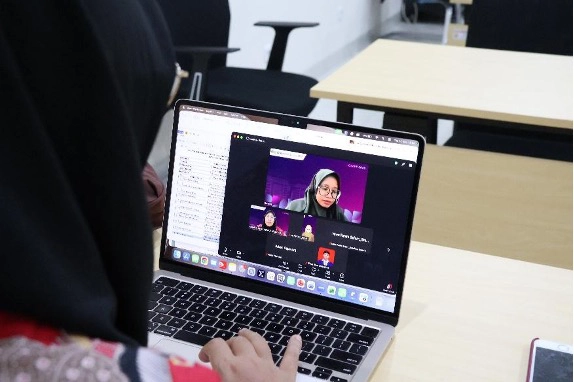
Following the main session, the conference continued with its second session, the paper presentation. A total of 53 presenters participated in this academic session through onsite and online presentations. Onsite presenters were assigned to parallel rooms, each with designated paper examiners, while online presenters joined through separate breakout rooms. This session provided researchers and participants with opportunities to present their work, receive feedback, and engage in academic discussions related to their respective research topics.
Through its series of presentations and paper discussions, ICEAPP 2026 provided an opportunity for students, academics, researchers, and professionals to exchange knowledge and broaden their understanding of English for academic and professional purposes. The conference also highlighted the importance of adapting to digital developments while maintaining the essential role of human thinking and communication. Moving forward, ICEAPP is expected to encourage further academic collaboration, support research development, and create more opportunities for knowledge sharing within the international academic community.
About the Authors:
– Adinda Prasty Ascalonicawati, S.S., M.A.
– Arfan Bintang Akael
– Heny Oktavia Ramadhani
– Shifa Meidina Sahwa
– Ayunda Sheva Magentha Valencia.
Lecturer and students of the English for Business and Professional Communication (BISPRO) Program, UPN “Veteran” Jawa Timur.
Editor: darsono.ar
⚡ Baca Lebih Cepat Artikel MMI di Ponsel Anda!
Ikuti Channel WhatsApp
Media Mahasiswa Indonesia (MMI):
KLIK DI SINI