
Abstract
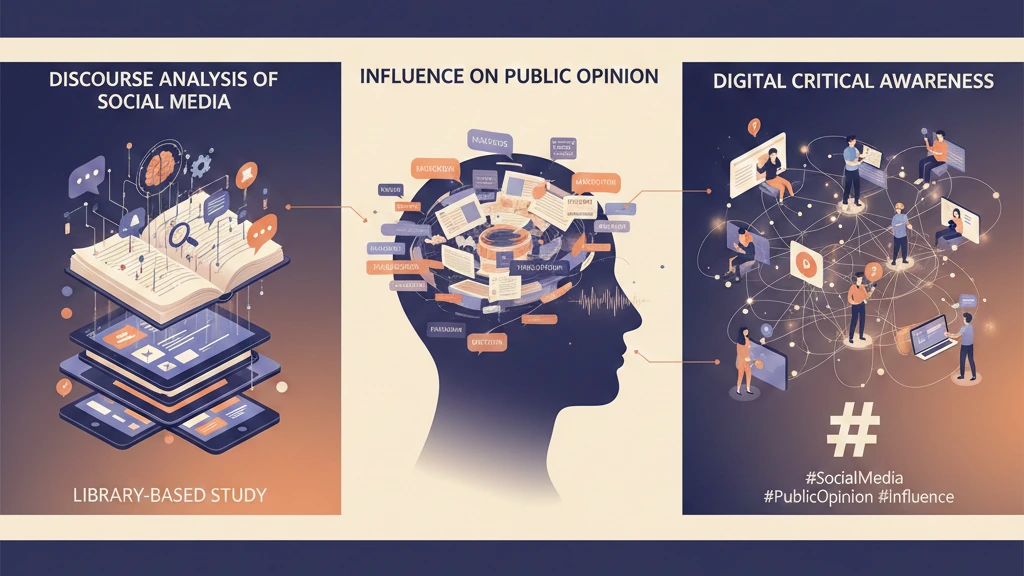
This article explores how discussions on social media platforms can shape, direct, and sometimes influence public opinion. This study brings together diverse theories and research on digital discourse, online interactions, and the circulation of meaning within networked spaces, and therefore is conducted as a desk-based inquiry using the principles of a systematic literature review. Drawing on insights from critical discourse analysis, narrative approaches, and interactional perspectives, this review examines how language and other semiotic resources are realized in digital communication.
Across the collected studies, social media emerges as a space where the meaning of a post is produced at a rapid pace, supported by multimodal features and ongoing user participation. Public opinion does not simply emerge in this environment; it is actively shaped through repetitive patterns, algorithmic curation, and engagement patterns that encourage selective exposure. Viral posts, comment threads, and platform-driven visibility all contribute to the formation of dominant viewpoints while deepening ideological divisions.
This synthesis demonstrates the growing importance of digital critical awareness, particularly as users must discern messages with hidden meanings, packaged in words that can influence readers’ or viewers’ emotions. Overall, this review demonstrates that understanding contemporary public opinion requires careful attention to online posts and the technological systems that reinforce them.
Keywords: Social Media, Public Opinion, Influence
1. Introduction
In the last decade, social media has evolved from a personal communication platform into a complex and influential information ecosystem, capable of shaping, directing, and even manipulating public opinion globally. Online comparison and social media fatigue are two issues that are relevant to today’s society and have an impact on users’ perceived well-being (Dutt, 2023). As previously known, social media is a digital platform that allows users to create, share, and interact with content online. Social media can share various information, including photos and videos. On social media, anyone can interact with anyone, anywhere. Social media serves as a platform for individuals to articulate their emotions and perspectives regarding matters of personal significance (Apif Supriadi & Fatmasari, 2021). Social media represents human freedom of expression in various matters. Daily discussion frequency on social media platforms was used to measure social media interaction (Booker et al., 2018). Habits in interacting on social media can influence a person’s opinion, and a person’s opinion can easily change when they get information spread through social media.
Social media can exacerbate an escalating situation and shape public perception (Anshori & Nadiyya, 2023). The power of social media that must be recognized is its ability to influence public perception. It influences public opinion through a flood of information, often with minimal verification. Furthermore, presenting content based on personal preferences can lead to misunderstandings among certain groups. Public opinion, essential to the foundations of democracy, is a socially constructed representation shaped by the methodologies and data from which it originates, as well as the interpretations of those responsible for assessing and applying it (McGregor, 2019). Public opinion often veers toward politics, public figures, and viral events on social media. Public opinion manipulation begins with information disseminated through social media by media organizations or individuals with social media accounts. The concern with public opinion is that the information received is baseless or a hoax.
Individuals often engage with those who have similar viewpoints and articulate their perspectives regarding contemporary events on social media, resulting in public opinion that is spontaneous, time-sensitive, and fundamentally social (Zhang et al., 2022). Therefore, issues regarding public opinion on social media often arise as interaction increases. This research will examine how online discourse operates and shapes public opinion. It analyzes literature on social media discourse and its influence.
2. Literature Review
2.1 Concept of Discourse Analysis
The study of discourse analysis in digital contexts has grown rapidly in the past five years, primarily due to increased attention to how language shapes online conversations. According to KhosraviNik (2020), digital discourse cannot be separated from platform structures, as users’ language choices constantly interact with technical features such as algorithms, commenting systems, and content distribution patterns. Recent studies have shown that critical discourse analysis (CDA) is now directed at the power relations formed through algorithmic interactions (Graham & Hardaker, 2021). This differs from classical approaches, as it focuses not only on text but also on how platforms mediate the spread of discourse.
In addition to CDA, narrative approaches have again gained attention in contemporary studies. Page (2021) emphasizes that narratives on social media are now collaborative, where a story no longer relies on a single author but is instead shaped through the contributions of many users, such as responses, recounts, and content duplication. Meanwhile, the interactional approach is increasingly relevant for examining how meaning is constructed in online conversations. Meredith and Stokoe (2020) show that digital interactions often develop different patterns than face-to-face conversations, particularly in terms of response strategies, disagreement management, and identity negotiation. With these developments, digital discourse analysis in the 2020–2025 period emphasizes that language, platforms, and user interactions work together to shape social meaning and influence.
2.2 Social Media as a Discourse Space
Social media has transformed into a space where public discourse is not only produced but also accelerated and modified by its technological structure. According to Zeng et al. (2021), social media should be understood as algorithmically mediated spaces that shape how users view and share content. Algorithms not only recommend information, but also influence the direction of discourse by regulating visibility and stagehead.
Recent research highlights how platforms shape issue representations. Velásquez & Rojas (2023) found that political and social representations on digital platforms are often shaped by the dynamic affective audience, where intense user emotion and engagement push certain narratives to greater prominence. At the same time, the phenomenon/echo chamber remains a significant concern. Mosleh et al. (2021) showed that users tend to form clusters of information that reinforce their beliefs, thereby narrowing the diversity of perspectives.
Thus, in the context of the current research, social media is not merely seen as a place to share opinions but as a discursive environment shaped by a mixture of influence, algorithms, and public participation.
2.3 Public Opinion in the Digital Age
The concept of public opinion in the 2020–2025 period has undergone a significant shift in meaning as it becomes increasingly connected to the dynamics of digital platforms. According to Wahl-Jorgensen (2020), the formation of public opinion is now increasingly influenced by emotional expressions spread on social media, so that public opinion often arises from affective intensification, a collectively generated emotional amplification. This aligns with the findings of Cinelli et al. (2021), who revealed that digital public opinion is formed through a combination of content virality, group trust, and algorithm-driven information consumption patterns.
In a psychological context, Cuan-Baltazar and colleagues (2020) showed that the validity of information is not always the primary factor in shaping public opinion. Instead, users are more influenced by the perception that an opinion is widely supported by others—a phenomenon that is amplified on platforms that display popularity indicators such as criticism And stockFurthermore, research by He et al. (2022) emphasizes that group identity in the digital world accelerates the process of internal consensus, so that public opinion is often formed within small, polarized communities. Therefore, public opinion in the digital era is the result of a dynamic interaction between emotions, algorithms, and social structures that emerge in online spaces.
2.4 Previous Research on Digital Discourse and Public Opinion
Recent studies have shown growing attention to how online discourse influences public perception. According to Kümpel and Unkel (2021), discourse on social media can shift public opinion, particularly when certain narratives gain legitimacy through seemingly widespread support. In the case of political and social issues, research by Freelon et al. (2020) shows that digital conversations often exhibit strong polarization patterns, with each information community developing a distinct narrative. Research on viral discourse has also increased in recent years. Tang et al. (2022) found that viral content on TikTok or Instagram circulates not only because of its visual appeal, but also because of its narrative ability to build emotional resonance. Meanwhile, Liu & Lei (2023) identified that user interactions such as support, criticism, or reinterpretation form channels for discourse dissemination, which then influence collective perceptions of the issue. However, most studies from 2020–2025 still focus on specific digital space phenomena, resulting in a lack of a comprehensive approach that combines critical, narrative, and interactional discourse analysis. This research attempts to bridge this gap by synthesizing recent findings to understand how social media discourse influences public opinion more comprehensively.
3. Research Method
3.1 Research Method
This study uses a descriptive design. Library-based research, an approach that relies entirely on documented knowledge to construct theoretical explanations and answer research questions. In recent methodological literature, library research is defined as the systematic exploration of scholarly writings, books, journal articles, research reports, and other academic documents, followed by a process of interpretation and synthesis. Booth, Colomb, and Williams (2020) emphasize that library research is not limited to collecting references; it requires analytical engagement with texts to generate coherent insights. Similarly, Jesson and Lacey (2021) argue that the increasing availability of digital studies has strengthened the relevance of literature-based studies, especially in fields that require conceptual mapping to understand discursive phenomena.
In this study, researchers examine theories and empirical discussions on discourse analysis, social media communication, and digital public opinion. The analysis does not involve field observations, interviews, or surveys. Instead, it focuses on a close reading of written materials to explore conceptual relationships, identify emerging themes, and integrate diverse scholarly contributions published between 2015 and 2025. This design ensures that the final interpretation is grounded in established knowledge while remaining sensitive to current academic developments.
3.2 Data Sources
The sources used in this study consist of academic materials that provide conceptual, methodological, and empirical insights relevant to discourse practices in digital environments. These include scholarly monographs on discourse analysis (Fairclough, Van Dijk, Wodak, and recent works by digital discourse scholars), peer-reviewed journal articles on social media communication, institutional reports on digital behavior, and conference papers discussing the dynamics of online public opinion.
The selection of these materials follows the recommendations of Snyder (2020) and Xiao and Watson (2021), who emphasize that literature-based research should be sourced from credible and citable academic sources. Therefore, all documents were retrieved from trusted databases such as Google Scholar, Eric, SAGE Publications, and leading academic repositories. By relying solely on secondary data, this approach allows researchers to map theoretical debates and highlight patterns in scholarly understanding of digital discourse.
3.3 Inclusion and Exclusion Criteria
The process of selecting sources for inclusion in the analysis was guided by established criteria for literature-based research. Only materials published between 2018 and 2025 were considered, ensuring that the theoretical and empirical discussions analyzed reflected current trends in digital communication studies. Sources should address themes related to discourse analysis, social media interaction, opinion formation, or related linguistic and communicative phenomena.
Documents lacking academic credibility, such as unreviewed online articles, personal blogs, or opinion pieces without a scientific basis, were excluded. Material not explicitly related to digital discourse or communication was also removed to maintain the analytical focus. This evaluative process is consistent with the methodological principles outlined by Pare, Trudel, and Jaana (2022), which emphasize transparency and relevance as essential components of rigorous literature selection.
3.4 Data Collection Procedures
Data collection began by identifying keywords aligned with the conceptual scope of the study, including terms such as “digital discourse,” “social media communication,” “public opinion,” “CDA,” “narrative framing,” and “interactional discourse.” These keywords guided the search in academic databases. Once potential sources were identified, each document underwent an initial screening to determine its relevance and methodological soundness.
The next stage involves close reading. During this process, theoretical arguments, analytical frameworks, and research findings are annotated and categorized based on their thematic significance. Bowen (2021) notes that document-based research requires careful attention to textual meaning, contextual relationships, and discursive patterns, all of which are central to the study’s analytical approach. The collected data are then organized into conceptual groupings that align with the research questions, thus creating a foundation for subsequent analysis.
3.5 Data Analysis Techniques
This research adopts qualitative content analysis, a method that allows researchers to systematically interpret textual information while maintaining analytical flexibility. Schreier (2020) emphasizes that content analysis in qualitative research is not a mechanical process of summarizing text, but rather an interpretive activity aimed at uncovering conceptual linkages, identifying recurring discursive themes, and generating theoretical insights.
The analysis process involved repeated readings, coding thematic categories, and synthesizing ideas. Researchers examined how discourse is constructed in social media environments, how linguistic strategies shape public reactions, and how these patterns correlate with existing models of opinion formation. This iterative approach facilitated the development of a nuanced and integrated understanding that reflects both classical discourse theory and contemporary digital communication studies.
3.6 Ensuring Source Credibility
To maintain scientific rigor, this study applied several considerations regarding source credibility. Only peer-reviewed publications, accredited academic books, and officially recognized institutional reports were used as primary references. The credibility of each source was evaluated based on its publication location, methodological clarity, theoretical contribution, and citation track record.
Additionally, multiple verification techniques are used by cross-checking the ideas of multiple authors to ensure consistency and avoid relying on a single or unconfirmed claim. A recent methodological discussion by Jesson, Matheson, and Lacey (2022) highlights the importance of such triangulation in literature-based research, arguing that credibility arises from the collective, rather than individual, evaluation of sources. This approach allows the research to maintain analytical coherence and theoretical reliability throughout the research process.
Finding and Discussion
Across the studies reviewed, several recurring insights appear regarding how discourse on social media operates and how it shapes public opinion. Three major themes consistently emerge: (1) the defining characteristics of online discourse, (2) the processes through which public viewpoints are formed, and (3) the dominant discursive patterns identified in earlier scholarship.
When these findings are considered alongside more recent research on gendered representation in digital media, such as Lee’s (2020) work on stereotype reproduction in East Asian entertainment news and Chan and Wu’s (2023) analysis of social-media-based gossip accounts, a clearer picture begins to form. Both contemporary online platforms and popular media tend to use similar narrative and linguistic strategies to influence how the public perceives social issues and public figures.
Recent studies show that gendered portrayals, sensational framing, and emotionally charged storytelling continue to circulate widely across digital spaces. Although these patterns resemble the dynamics of traditional tabloid reporting, they are now intensified by platform algorithms and the speed of user-driven virality.
When viewed together, the reviewed literature offers a comprehensive understanding of how social media discourse influences public thinking. Despite focusing on different aspects such as framing, multimodality, viral spread, echo chambers, or gendered narratives, these studies point to the same conclusion: the way information is presented, framed, and repeatedly circulated online often shapes public perception more strongly than the factual content itself.
Characteristics of Social Media Discourse
Social media discourse is naturally multimodal, fast-paced, and highly interactive. People communicate through a mix of text, images, videos, emojis, sound effects, and layout designs that allow meanings to be layered, blended, and creatively expressed. Platforms like Instagram, TikTok, and Facebook enable users to combine visual storytelling with captions, hashtags, and symbolic cues, resulting in discourse that is dynamic, performative, and constantly changing.
Another notable characteristic is the rapid speed at which content circulates. Posts spread quickly and frequently change shape through comments, reposts, duets, stitches, or remixes. As discourse moves across platforms, it becomes a shifting and evolving entity.
Interactivity is also central to social media, although it does not always take the form of deep discussion. Many interactions are short, ritualistic, and identity-affirming likes, emojis, quick reactions, supportive remarks, or sarcastic comments. These small gestures collectively shape the tone and direction of public conversation.
Mechanisms of Public Opinion Formation
Various studies show that social media influences public opinion through several intertwined processes. One of the strongest is the way certain posts spread. Content that is emotionally charged, visually striking, or provocative often circulates quickly, and this rapid diffusion tends to elevate particular interpretations while pushing quieter or more balanced views to the margins. Another important factor is how platforms filter information. Algorithms continuously adjust what users see based on their past interactions, which results in repeated exposure to similar viewpoints. Over time, this creates enclosed information spaces where alternative perspectives rarely appear, reinforcing divisions and deepening polarization.
Research in this area also reveals several recurring patterns. Public reactions frequently split into sharply opposing camps, showing clear signs of polarization. Many studies also underline the role of framing: language choices, visual elements, narrative styles, and rhetorical devices subtly guide how issues are understood. Online interaction often becomes performative as well, with users relying on irony, sarcasm, rhetorical questioning, or symbolic gestures to express identity or group belonging. Everyday users frequently produce counter-narratives too, challenging official statements and offering competing interpretations of events. The circulation of discourse is further shaped by intertextual practices memes, edited images, screenshots, and remixed content allow messages to shift and acquire new meanings as they travel. Added to this, the design and algorithmic systems of each platform strongly influence how discussions form, evolve, and reach large audiences.
Integration of Recent Studies on Gender Stereotypes in Digital Media
The overall findings gain further nuance when viewed together with recent research on gender representation in digital entertainment discourse. Studies by Lee (2020) and Chan & Wu (2023) reveal that gossip platforms and celebrity-focused accounts still reproduce gender stereotypes through selective wording, moralized framing, and emotionally charged storytelling.
Female public figures often appear in narratives centered on appearance, rivalry, or perceived moral shortcomings, portraying them as competing with peers, seeking attention, or facing constant scrutiny over relationships, wealth, or marriage. Male celebrities, meanwhile, are frequently framed through stories about their physical flaws, tumultuous romantic histories, or strategic attempts to maintain relevance.
Although these portrayals now circulate in algorithm-driven digital environments rather than printed tabloids, their discursive patterns remain strikingly similar. Viral posts, reaction threads, and remix culture amplify these narratives, allowing stereotypes to spread quickly and reach large audiences. Repetition through shares, duets, memes, and screenshots gives these narratives new forms while preserving their underlying ideological messages.
Taken together, these studies show that while media formats have evolved, the mechanisms through which gender stereotypes are produced and the ways they shape public perception remain largely unchanged. What differs is the intensity, digital platforms accelerate and magnify these dynamics through their speed, multimodal features, and algorithmic amplification.
Conclusion
The body of literature reviewed demonstrates that social media is not merely a communication tool but a powerful discursive space where public opinion is continually shaped, circulated, and reconfigured. The digital environment, characterized by rapid information flow, multimodality, and high interactivity, creates conditions in which meanings are constantly produced, negotiated, and reinterpreted. Unlike traditional one-way media, social platforms allow users to act as both consumers and producers of discourse, contributing to a dynamic and participatory ecosystem of meaning-making.
Framing strategies, emotionally impactful narratives, multimodal content, and algorithm-controlled visibility all play major roles in determining which messages become dominant. Viral dynamics elevate emotionally resonant content, while algorithmic curation narrows exposure and reinforces selective viewpoints, often intensifying polarization. As a result, public opinion increasingly emerges from fast-moving, emotionally saturated communication rather than carefully balanced information. Insights from studies on gender representation further highlight how sensationalism, stereotypes, and character-based framing remain deeply rooted in digital discourse. While platforms have changed, the underlying logic remains consistent only the scale and speed have intensified.
In essence, the packaging, interpretation, and recirculation of information on social media often carry greater influence than the factual content itself. This underscores the importance of critical digital literacy as individuals navigate the complexities of online communication and strive for more informed, reflective public discourse.
Writers:
- Dita Yarohma
- Kiki Andriani
- Lydia Nurjannah
- Dahnilsyah
Student College of the English Language Education Study Program at Riau University
Lecturer: Dr. Dahnilsyah, S.S., M.A
Editor: Rahmat Al Kafi
References
Anshori, I., & Nadiyya, F. A. A. (2023). PERAN RUANG DIGITAL SEBAGAI TRANSFORMASI GERAKAN AKSI SOSIAL MAHASISWA MELALUI PLATFORM SOSIAL MEDIA. Jurnal Analisa Sosiologi, 12(2). https://doi.org/10.20961/jas.v12i2.68981
Apif Supriadi, & Fatmasari. (2021). Implementasi Metode Klasifikasi Naive Bayes Pada Sistem Analisis Opini Pengguna Twitter Berbasis Web. Jurnal Sistem Informasi, 10(1). https://doi.org/10.51998/jsi.v10i1.356
Baker, M. (2021). Research synthesis in the digital era: Evaluating sources and evidence. Journal of Contemporary Research Methods, 15(2), 112–128.
Booker, C. L., Kelly, Y. J., & Sacker, A. (2018). Gender differences in the associations between age trends of social media interaction and well-being among 10-15 year olds in the UK. BMC Public Health, 18(1). https://doi.org/10.1186/s12889-018-5220-4
Booth, W. C., Colomb, G. G., & Williams, J. M. (2020). The craft of research (4th ed.). University of Chicago Press.
Bowen, G. A. (2021). Document analysis as a qualitative research method. Qualitative Research Journal, 21(2), 300–312. https://doi.org/10.1108/QRJ-03-2020-0012
Dutt, B. (2023). Social media wellbeing: Perceived wellbeing amidst social media use in Norway. Social Sciences and Humanities Open, 7(1). https://doi.org/10.1016/j.ssaho.2023.100436
Fairclough, N. (2013). Critical discourse analysis: The critical study of language (2nd ed.). Routledge.
Figueroa, L. (2022). Digital information credibility: Assessing trust in online scholarly sources. Information Science Review, 28(1), 44–59.
Gough, D., Oliver, S., & Thomas, J. (2021). Systematic approaches to reviewing the literature. SAGE Publications.
Hartono, R., & Sari, M. (2023). Analytical rigor in qualitative literature studies: Frameworks for data organization. Indonesian Journal of Educational Research, 11(3), 201–215.
Jesson, J., Lacey, F., & Matheson, L. (2022). Doing your literature review: Traditional and systematic techniques (2nd ed.). SAGE Publications.
Jesson, J., & Lacey, F. (2021). Reviewing research in the digital era: Challenges and possibilities. Journal of Academic Librarianship, 47(6), 102–114. https://doi.org/10.1016/j.acalib.2021.102473
Kim, J., & Park, S. (2020). Inclusion and exclusion criteria in contemporary literature reviews: Methodological considerations. International Journal of Qualitative Methods, 19, 1–12.
McGregor, S. C. (2019). Social media as public opinion: How journalists use social media to represent public opinion. Journalism, 20(8). https://doi.org/10.1177/1464884919845458
Miles, M. B., Huberman, A. M., & Saldaña, J. (2020). Qualitative data analysis: A methods sourcebook (4th ed.). SAGE Publications.
Murray, T. (2021). Filtering scholarly evidence: Principles of inclusion for literature-driven studies. Journal of Academic Inquiry, 9(4), 66–82.
Patel, R. (2024). Evaluating scholarly reliability in library-based research: Strategies for the digital knowledge landscape. Journal of Information Literacy, 18(2), 95–110.
Pare, G., Trudel, M. C., & Jaana, M. (2022). Synthesizing information systems knowledge: A structured literature review approach. Communications of the Association for Information Systems, 50(1), 104–134. https://doi.org/10.17705/1CAIS.05006
Rogers, A., & Ahmed, K. (2023). Advanced qualitative synthesis: Integrating conceptual and empirical evidence. Qualitative Research Journal, 23(2), 178–195.
Schreier, M. (2020). Qualitative content analysis in practice (2nd ed.). SAGE Publications.
Snyder, H. (2020). Literature review as a research methodology: An overview and guidelines. Journal of Business Research, 104, 333–339. https://doi.org/10.1016/j.jbusres.2019.07.039
Tran, H., & Lucas, D. (2022). Academic database selection and source triangulation in literature-oriented research. Research Methodology Quarterly, 17(1), 55–73.
Van Dijk, T. A. (2021). Discourse and power in contemporary society. Cambridge University Press.
Wang, Y. (2020). Digital-era data selection: Ethical and methodological reflections. Journal of Research Ethics, 14(3), 249–262.
Wodak, R., & Meyer, M. (2020). Methods of critical discourse studies (4th ed.). SAGE Publications.
Xiao, Y., & Watson, M. (2021). Guidance on conducting a systematic literature review. Journal of Planning Education and Research, 41(3), 298–312. https://doi.org/10.1177/0739456X17734828
Zhang, L. (2025). Techniques for validating source credibility in educational literature studies. Education Review International, 7(1), 33–48.
Zhang, Y., Chen, F., & Rohe, K. (2022). Social Media Public Opinion as Flocks in a Murmuration: Conceptualizing and Measuring Opinion Expression on Social Media. Journal of Computer-Mediated Communication, 27(1). https://doi.org/10.1093/jcmc/zmab021

⚡ Baca Lebih Cepat Artikel MMI di Ponsel Anda!
Ikuti Channel WhatsApp
Media Mahasiswa Indonesia (MMI):
KLIK DI SINI