
In recent months, data shows that plastic prices continue to rise.
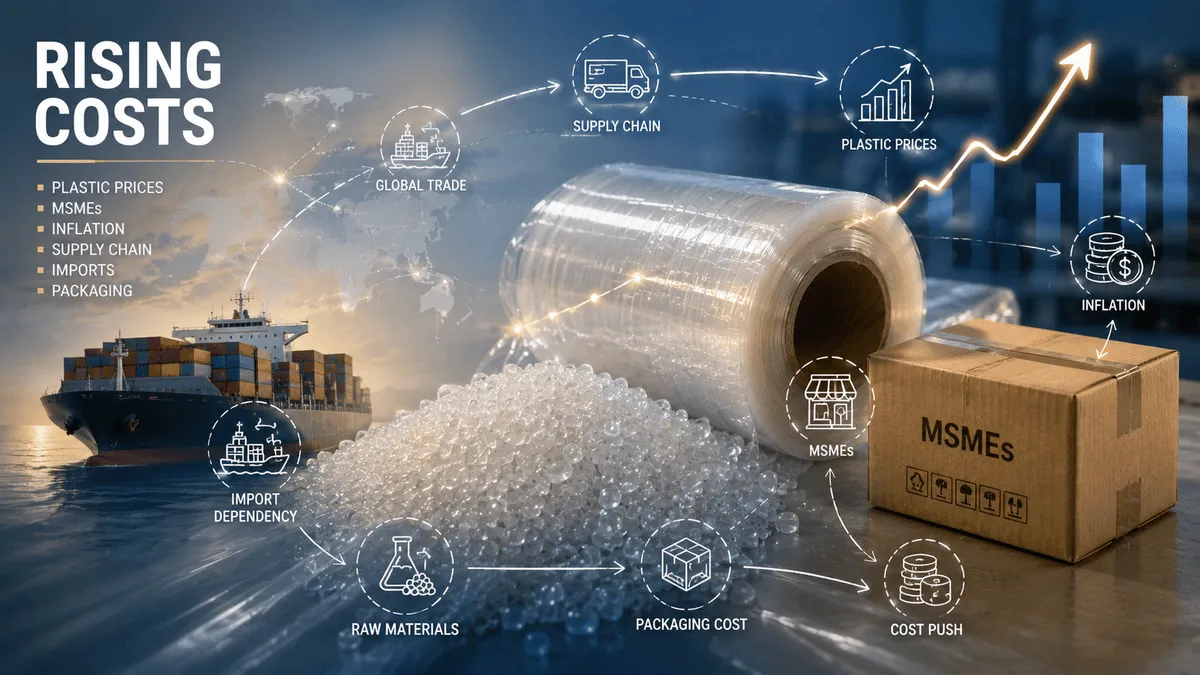
This condition is triggered by disruptions in the global supply chain due to geopolitical conflicts, especially in the distribution routes of raw materials in the Middle East region, particularly in the Strait of Hormuz.
As a result of this situation, the price of naphtha as the main raw material for plastic has also increased.
Since naphtha is needed in the plastic manufacturing process, the price increase makes production costs more expensive.
This then causes the price of plastic in the market to rise.
The impact of this situation is not only felt by plastic producers, but also directly felt by small traders who heavily rely on plastic packaging.
Many of them have started to complain about additional cost increases, causing their business profits to gradually decline.
I believe that the continued rise in plastic prices can have quite serious effects on the economy.
Small businesses will be increasingly burdened because they have to continuously adjust selling prices as production costs rise.
Furthermore, they also risk losing customers if prices are raised too high.
If this situation continues, the impact could spread and trigger inflation.
Ultimately, this situation not only makes it difficult for business players, but can also disrupt the overall economic balance.
Indonesia’s Dependence on Imported Plastic Raw Materials
Indonesia’s dependence on imported plastic raw materials is one of the major problems.
As quoted from Investor.id on Monday (April 13, 2026), the Minister of Micro, Small, and Medium Enterprises (MSMEs), Maman Abdurrahman, mentioned that around 55% of Indonesia’s plastic raw materials are still imported from abroad, and around 70% of the distribution channels pass through central areas that are currently experiencing conflict.
This situation causes the supply of raw materials to become unstable, making it difficult to control plastic prices.
As a result, business actors have to face uncertainty regarding the increase in plastic prices.
For small businesses, this condition is quite burdensome because they have to adjust production costs amid limited profits.
The Impact on MSMEs
On the other hand, the increase in plastic prices also directly affects production costs, especially for MSMEs (Micro, Small, and Medium Enterprises).
Many small businesses still heavily rely on plastic as the main material for packaging their products, particularly in the food and beverage sector.
Quoting IDN Time on Monday (April 6, 2026), the Secretary-General of the Indonesian Market Traders Association (IKAPPI), Reynaldi Sarijowan, stated that the prices of various types of plastics, such as PE (Polyethylene) and PP (Polypropylene) plastics, have experienced a significant increase, with some types even rising by 50% to 100%.
The rise in plastic prices places small businesses in a quite difficult position, namely raising selling prices with the risk of losing customers, or maintaining prices but having to lower packaging quality.
Both of these options are not easy because they can disappoint customers and reduce their interest in buying.
In addition, not all MSME (Micro, Small, and Medium Enterprises) actors have reserve capital to cover the continuously rising production costs.
If this situation continues, many small businesses are at risk of experiencing a decline in revenue, which can disrupt the continuity of their business.
Rising Plastic Prices and Inflation
In addition, the increase in plastic prices can also trigger inflation, particularly cost-push inflation.
When production costs rise, producers usually adjust the selling prices to maintain profits, which can affect the increase in prices of various products in society and make consumers have to pay more for the same goods.
If this situation continues, the purchasing power of the community may decrease because many people will prefer to reduce purchases or look for cheaper products.
In the long term, this can slow down economic activity.
Challenges in Transitioning to Alternative Materials
There is a view that the increase in plastic prices can be an opportunity to switch to more environmentally friendly materials.
This opinion is not entirely wrong because the use of plastic alternatives such as paper can help reduce environmental pollution.
However, in reality, not all business actors are able to switch quickly.
In addition to prices that tend to be higher, the adaptation process to switch to new packaging also requires time and adjustments, both in terms of costs and production habits.
Many MSMEs (Micro, Small, and Medium Enterprises) still have limited capital, making it difficult to immediately replace the packaging materials they usually use.
This condition shows that not all small business actors can immediately switch to environmentally friendly alternative materials.
Conclusion
Based on the explanation above, it can be concluded that the increase in plastic prices is not just an ordinary problem because it has the potential to disrupt economic stability and negatively impact the economic sector.
Therefore, the government and relevant parties need to take concrete steps to find solutions, either by efforts to stabilize plastic prices by seeking plastic raw material suppliers from other countries, or by accelerating the development of alternative packaging materials such as plastic made from cassava, seaweed, or other natural materials at more affordable prices.
This step is important to maintain the sustainability of small businesses that play a significant role in the economy.
If not immediately addressed, this situation could continue and become an increasingly heavy burden for the society.
Penulis: Anisah Rahmawati
Mahasiswa Prodi Akuntansi Sektor Publik, Universitas Harkat Negeri
Dosen Pengampu: Muchammad Sofyan Firmansyah, S.S.
Editor: Siti Sajidah El-Zahra
Bahasa: Rahmat Al Kafi

⚡ Baca Lebih Cepat Artikel MMI di Ponsel Anda!
Ikuti Channel WhatsApp
Media Mahasiswa Indonesia (MMI):
KLIK DI SINI