
Abstract
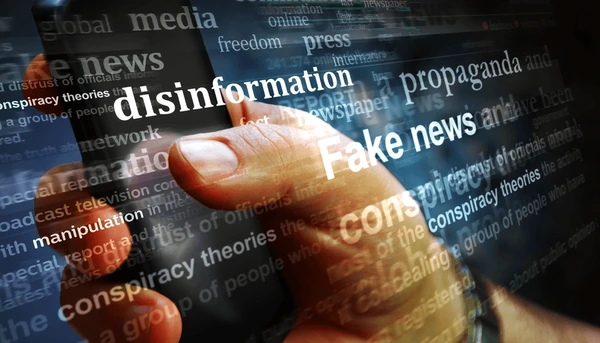
Digital disinformation in the age of information technology threatens social stability and democracy. The rapid spread of false information triggers polarization and reduces public trust in institutions.
This article explores the role of civic and political education in combating digital disinformation through digital literacy, critical thinking, and political understanding. Data shows that education can significantly reduce the spread of hoaxes. With cross-sector synergy, it is hoped that the public can combat the challenge of false information more wisely.
Introduction
The development of digital technology and the internet has revolutionized the way we access and disseminate information. Nowadays, all kinds of news, opinions, and data can be accessed instantly from various platforms, especially social media.
However, this convenience also carries a major risk, namely the proliferation of digital disinformation, which is the dissemination of false information or messages deliberately created to manipulate public opinion.
This phenomenon of disinformation not only distorts information but also has the potential to undermine social order and the democratic process, especially at important moments such as elections.
Data from the Indonesian Internet Service Providers Association (APJII, 2023) shows that around 65% of internet users in Indonesia have been exposed to false information online. This shows how urgent the need for education and effective countermeasures is.
In facing the challenge of digital disinformation, civic education and political education are important foundations. This education can equip citizens with critical thinking skills, a healthy skepticism, and political knowledge so that they can analyze and reject invalid information.
The Role of Civic Education in Combating Digital Disinformation
Civic education plays a strategic role in shaping the character of intelligent and responsible citizens. One of its main foundations is developing digital literacy, which is the ability to find, disseminate, and use information wisely and correctly. When education is enriched with digital literacy material, students learn not to simply accept all the information they receive, but to be able to verify the truth of the content.
Research by the Ministry of Communication and Information Technology’s Education and Training Center (2024) shows that students with digital literacy education are able to identify fake news up to 78% of the time, which is much higher than the group without such education, which is only 55%.
This highlights the importance of educational materials that teach techniques for verifying information sources, recognizing the characteristics of fake news or content, and avoiding the spread of unconfirmed content.
In addition to technical skills, civic education also instills social values such as tolerance, justice, and solidarity. These values are important so that citizens are not easily provoked by content that deliberately causes division. By understanding diversity and mutual respect, society is able to maintain social harmony amid the rapid flow of digital information
Political Education to Strengthen Digital Democracy Resilience
Political education provides citizens with a framework for understanding political structures and dynamics, as well as the dangers of propaganda that commonly appear in the form of disinformation. In the digital context, this education enables citizens to recognize the motives behind the spread of false or misleading information, which is often used to benefit certain groups or individuals.
A survey by the Indonesian Institute of Sciences (LIPI, 2023) revealed that 62% of respondents with a good understanding of politics are more aware of propaganda on social media and tend to fact-check before believing information. A good understanding of politics encourages citizens to approach information with rational analysis and avoid emotional actions that can widen the divide.
Read more: Generasi Muda dan Dilema Partisipasi Politik: Peduli atau Apatis?
Political education also encourages active participation in an ethical and fact-based democratic process. A politically educated society may become critical observers of democracy, report fake news, and reject manipulation that could weaken the political system.
Education Strategies to Combat Disinformation
Combating digital disinformation requires structured measures that are relevant to technological developments. The following are important strategies that can be implemented:
1. Integration of Digital Literacy into the Curriculum
The government has initiated a program to incorporate digital literacy into civics and politics subjects so that students receive technical and ethical training when dealing with digital media (Ministry of Education and Culture, 2025). Projections show that by 2026, 75% of schools in Indonesia will have fully implemented this curriculum.
2. Fact-Checking Training
The use of fact-checking applications such as TurnBackHoax.id, which has been proven to reduce the spread of hoaxes by up to 35% in certain areas, is an important tool for educating the public to validate news.
3. Debate and Discussion Skills Development
Classroom discussions and debates on current issues can hone students’ critical analysis and rational argumentation skills and teach them to be open to other people’s opinions.
4. Public Awareness Campaigns
The government, media, and NGOs work together to hold digital literacy education campaigns on various platforms to reach the wider community.
5. Multi-Stakeholder Collaboration
Synergy between educational institutions, the media, the government, and civil society is needed to create a healthy information environment and reduce the space for the spread of disinformation.
Challenges and Solutions
The challenges faced are quite significant, such as limited internet access in remote areas, low awareness of the importance of verification, and sophisticated information manipulation technologies that are increasingly difficult to detect, such as the use of deepfakes and algorithmically processed content.
Solutions that can be implemented include improving the development of information technology infrastructure to ensure equitable access, intensive training for teachers and educators on digital and political literacy, and strict legal regulations to crack down on professional and organized disinformation spreaders.
Conclusion
Civic and political education plays an important role in countering the threat of digital disinformation by equipping citizens with digital literacy skills, critical thinking, and a solid understanding of politics. Empirical data shows that this education is effective in reducing the spread of hoaxes and maintaining the resilience of Indonesia’s digital democracy.
Cross-sector collaboration is needed to ensure that digital literacy education and campaigns run optimally, thereby creating a society capable of maintaining integrity and democracy in the digital age.
Author: Nur Chofifah
Biology Student, UIN Siber Syekh Nurjati Cirebon
Supervising Lecturer: Wisnu Hatami, M.Pd.
Reference
Kementerian Komunikasi dan Informatika Republik Indonesia. (2024). Laporan Literasi Digital dan Penanggulangan Hoaks . Jakarta: Kominfo.
Asosiasi Penyelenggara Jasa Internet Indonesia (APJII). (2023). Pengawasan Penggunaan Internet Indonesia . Jakarta:APJII.
Lembaga Ilmu Pengetahuan Indonesia (LIPI). (2023). Survei Persepsi Politik dan Informasi Digital . Jakarta: LIPI.
Pusat Pendidikan dan Pelatihan Kominfo. (2024). Evaluasi Program Literasi Digital di Sekolah . Jakarta: Kominfo.
TurnBackHoax.id. (2024). Laporan Aktivitas Verifikasi Fakta . Jakarta: Masyarakat Anti Fitnah Indonesia (MAFINDO).
Putri, DM, & Wijaya, L. (2022). Peran Pendidikan Kewarganegaraan dalam Meningkatkan Literasi Digital dan Menangkal Disinformasi. Jurnal Pendidikan dan Kebijakan Publik , 8(3), 45-60.
Aisyah, S. (2020). Disinformasi dan Dampaknya terhadap Masyarakat. Jurnal Komunikasi , 12(1), 45-60.
Eria, S., & Tim. (2024). Peran Pendidikan Kewarganegaraan dalam Menangkal Disinformasi pada Kampanye Pemilihan Umum 2024: Studi Kasus Sekolah Menengah. Jurnal Riset Pendidikan dan Politik , 5(2), 100-120.
Editor: Salwa Alifah Yusrina
Bahasa: Rahmat Al Kafi
Ikuti berita terbaru Media Mahasiswa Indonesia di Google News
⚡ Baca Lebih Cepat Artikel MMI di Ponsel Anda!
Ikuti Channel WhatsApp
Media Mahasiswa Indonesia (MMI):
KLIK DI SINI