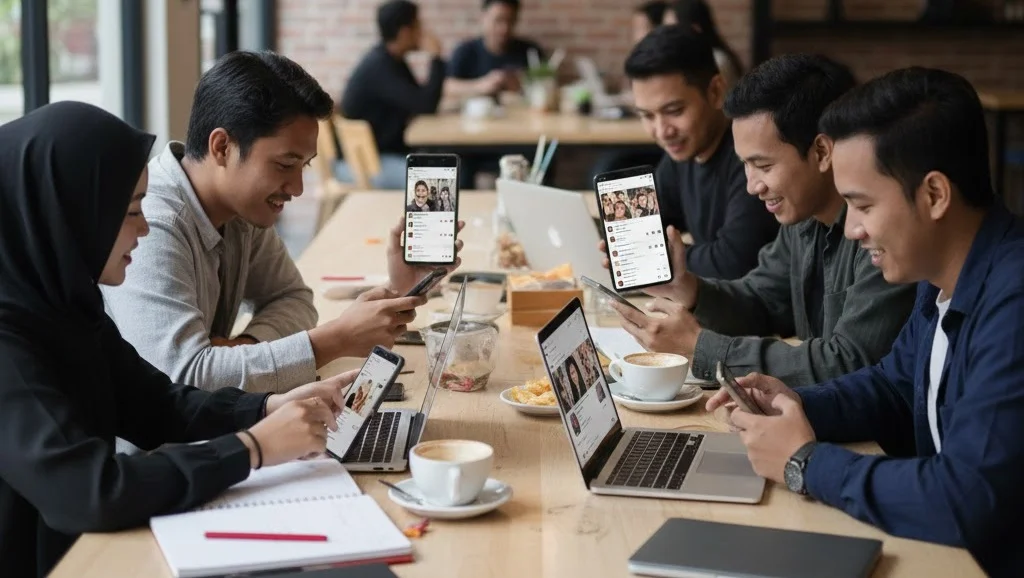

In today’s digital era, social media has become one of the most powerful tools influencing almost every aspect of human life, especially among university students.
It is no longer just a means of entertainment or communication, but also a platform for learning, networking, and self-expression. For many students, social media is the main bridge that connects their academic life with the outside world.
One of the greatest impacts of social media on university students is its ability to provide instant access to information. Through platforms such as YouTube, LinkedIn, Instagram, and X (formerly Twitter), students can easily find educational content, online courses, and academic discussions.
This has made learning more flexible and interactive. For example, students can join online study communities, share research findings, or even participate in global academic projects without leaving their homes.
Furthermore, social media allows students to develop their creativity and communication skills. Many use these platforms to share their opinions, promote small businesses, or build a personal brand. This experience can prepare them for future careers where digital literacy and online presence are becoming increasingly important.
Social media can also serve as a space for advocacy and social awareness. Many students use it to raise their voices about social issues, environmental campaigns, and human rights, proving that social media can be a tool for positive change.
However, despite its advantages, social media also brings significant negative effects. The most common issue is addiction. Many students spend excessive hours scrolling through feeds, watching short videos, or comparing their lives to others.
This habit often leads to procrastination, lack of focus in class, and declining academic performance. Moreover, the constant exposure to “perfect” lifestyles on social media can cause feelings of inadequacy, anxiety, and low self-esteem. It becomes a silent pressure that affects students’ mental health and emotional well-being.
Another concern is misinformation. In the age of digital content, not everything that circulates online is accurate. Students who depend too much on unverified information risk being misled. Therefore, critical thinking and digital literacy are essential skills that every student must develop.
In conclusion, social media has both positive and negative influences on university students. When used wisely, it can serve as an effective learning tool, a source of inspiration, and a means to build valuable connections. But when used carelessly, it can lead to distraction, stress, and a decline in academic quality.
Thus, the key is balance—students should learn to manage their time online, be selective about the content they consume, and use social media to support, not hinder, their personal and academic growth.
Writer: Ayu Rahmawati (24111004)
Student of Akuntansi Sektor Publik Universitas Harkat Negeri
Active in staff Badan Perwakilan Mahasiswa
Editor: Ika Ayuni Lestari
Languange: Rahmat Al Kafi
⚡ Baca Lebih Cepat Artikel MMI di Ponsel Anda!
Ikuti Channel WhatsApp
Media Mahasiswa Indonesia (MMI):
KLIK DI SINI