
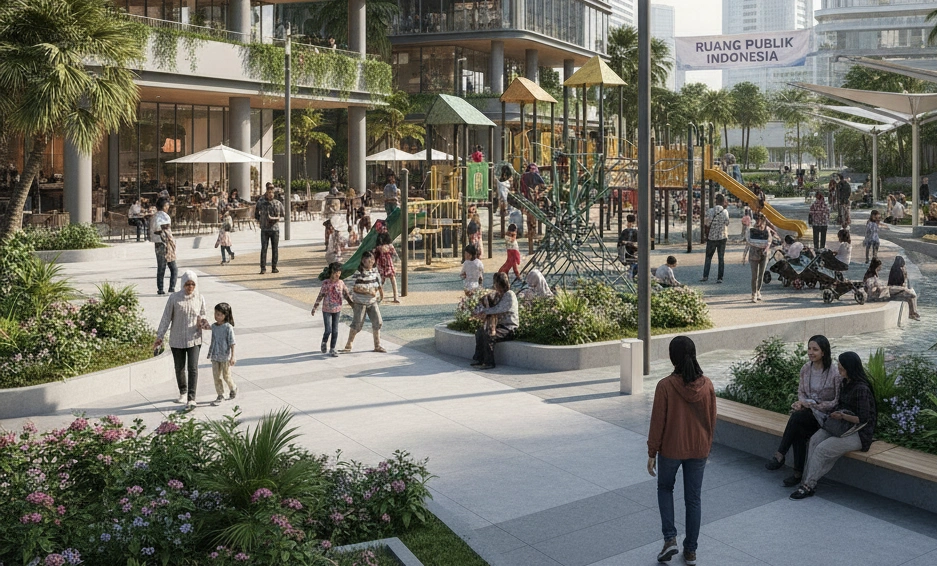

When the boredom hits, scrolling through your phone no longer helps. The desire to go out is followed by a deep frustration because there is no place to go for free.
People tend to think about going to cafés or shopping malls when it comes to going out. In fact, people should be able to enjoy public spaces that are safe, comfortable, and accessible without having to spend money.
However, in Indonesia, such spaces are limited or poorly maintained. Parks are often small, crowded, or located in central areas, making it difficult for people who live far from the city center to access them. This shows a clear gap between urban development and the real needs of citizens.
One thing i have noticed more often is that in many places, the sight of people flocking to town squares and parks during the holidays. There are people came from miles away just to find a place to unwind, socialize, or simply enjoy the scenery.
This indicates how much society craves spaces to just relax and interact. Limited access to public spaces has become and how unequal it is.
Most public spaces, such as parks or city squares, are concentrated in central areas of big cities, forcing residents in suburban or rural areas difficult to access it. This creates inequality, as access to fresh air, recreational areas, and social interaction becomes a privilege for those who live closer to the city center.
One major problem is, here in Indonesia public spaces are often shared by various groups and activities, which can sometimes create tension between community use and commercial interests. Altough, the presence of small local businesses in public areas is not necessarily a bad thing.
In fact, small vendors and microenterprises can bring life to these spaces and support the local economy. The real issue arises when public spaces are used inappropriately, for example, when playgrounds, parks, or pedestrian paths are taken over for commercial purposes, disrupting their primary function.
Therefore, what is needed is not the removal of economic activity from public spaces, but thoughtful management that ensures everyone can benefit. With proper regulation and spatial planning, both entrepreneurs and the public can share these spaces harmoniously.
Urban development should strike a balance between economic opportunities and social needs, ensuring that public spaces remain places for interaction, relaxation, and community life.
Baca Juga: Ketidakmerataan Pembangunan Infrastruktur Menghambat Kemajuan Daerah
The lack of accessible and well-maintained public spaces in Indonesia reflects a deeper issue of inequality and misplaced urban priorities. When open areas for rest, play, and social interaction become scarce or commercialized, citizens lose a fundamental aspect of community life.
Public spaces should not be treated as luxuries or secondary to economic development, they are essential for physical health, mental well-being, and social cohesion.
Therefore, the government and urban planners must prioritize the creation and maintenance of inclusive, safe, and accessible public spaces for all. Investing in these spaces means investing in the happiness, equality, and unity of the nation.
Penulis: Nabila Firda Maulidya
Mahasiswa DIV Akuntansi Sektor Publik Universitas Harkat Negeri
Editor: Ika Ayuni Lestari
Bahasa: Rahmat Al Kafi
Ikuti berita terbaru Media Mahasiswa Indonesia di Google News

⚡ Baca Lebih Cepat Artikel MMI di Ponsel Anda!
Ikuti Channel WhatsApp
Media Mahasiswa Indonesia (MMI):
KLIK DI SINI