
Abstract
Pulau Cinta, located along the Kampar River in Riau Province, is an emerging nature-based tourism destination characterized by its white sandbank, riverside landscape, and accessibility from Pekanbaru City. Despite its strong natural appeal, the destination faces several development challenges, including limited facilities, weak management, and insufficient promotion. This study analyzes the tourism potential of Pulau Cinta using a qualitative descriptive approach through field observation, interviews, and SWOT analysis. The findings reveal that Pulau Cinta’s strengths lie in its unique natural environment and strategic location, while its weaknesses include infrastructural limitations and unstructured governance. Opportunities arise from the growing demand for nature tourism and potential multi-stakeholder collaboration, whereas threats include environmental degradation and competition from similar destinations. The resulting strategy matrix highlights the importance of sustainable infrastructure development, strengthened community-based tourism management, and environmentally responsible governance. The study concludes that tourism development in Pulau Cinta should prioritize sustainability, community empowerment, and strategic planning to enhance destination competitiveness and ensure long-term viability.
Keywords: Pulau Cinta; nature-based tourism; community-based tourism; sustainable development; SWOT analysis; tourism planning; Kampar River.
I. Introduction
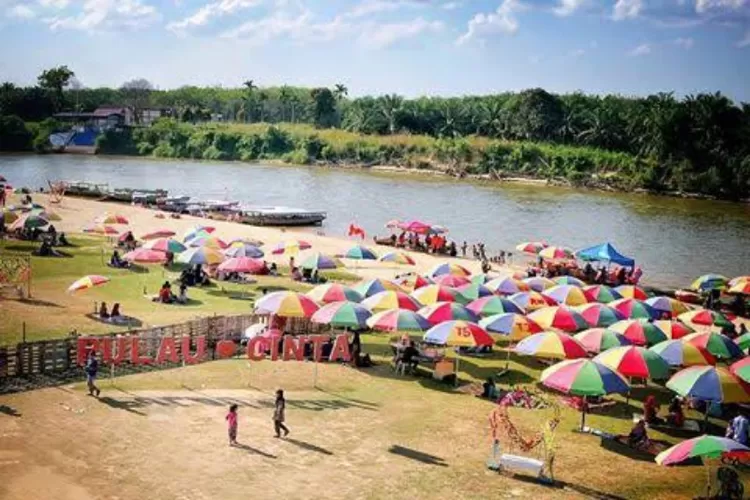
Pulau Cinta is a natural tourism object which is located in Teluk Jering Hamlet, Teluk Kenidai Village, Tambang District, Kampar Regency, Riau Province. Positioned along the Kampar River and relatively close to Pekanbaru City, the area offers a unique form of river-based tourism, where visitors can enjoy stretches of white sand, riverside scenery, and a well-preserved natural atmosphere. According to Lane and Kastenholz (2015), nature-based destinations in rural areas possess a distinct appeal as they provide authentic rural landscapes sought by modern tourists who wish to escape urban congestion. This unique landscape makes Pulau Cinta highly potential to develop as one of Kampar’s prominent tourism destinations.
The development of Pulau Cinta is closely related to the growing demand for alternative tourism sites that are affordable, accessible, and sustainable. The local government and community tourism groups have attempted to implement community-based tourism, in which local residents act as key managers and direct beneficiaries of tourism activities. Suwena and Widyatmaja (2017) emphasize that community involvement is a critical component for successful tourism development because it enhances the sense of ownership and maximizes socio-economic benefits for local communities. Goodwin (2016) further asserts that community-based tourism can contribute to community welfare when managed responsibly and guided by sustainability principles.
From a tourism planning perspective, the potential of Pulau Cinta may also be understood through the Tourism Area Life Cycle (TALC) framework proposed by Butler (1980), which states that every destination goes through stages of exploration, development, consolidation, and possible stagnation. To avoid stagnation, stakeholders need to understand tourist demand, destination attractiveness, and environmental threats. Several scholars highlight that environmental quality, accessibility, and landscape uniqueness are major determinants of destination attractiveness (Yoeti, 2016; Cooper, 2019). The Teluk Jering area, including Pulau Cinta, is relevant to this discussion because it combines natural beauty with geographic accessibility from urban centers.
Furthermore, the development of Pulau Cinta should be viewed through the lens of sustainability, as underscored by UNWTO (2020), which states that destination growth must consider environmental, social, and economic dimensions to ensure long-term viability. In river-based destinations such as Pulau Cinta, environmental management becomes essential due to fluctuating water levels, erosion risks, and limited facilities that may affect visitor experience. Jamieson and Jamal (2019) also note that rural or riverside destinations often face infrastructure challenges, necessitating carefully measured and data-driven development strategies.
Based on this background, the present study aims to analyze Pulau Cinta’s condition as a local tourism destination, identify its potentials and challenges, and formulate sustainable development strategies. Cooper (2019) asserts that strategic destination analysis must be grounded in a comprehensive evaluation of strengths, weaknesses, opportunities, and threats to produce effective planning. Therefore, this study is expected to provide both academic contributions and practical recommendations for local governments, community groups, and tourism managers in enhancing the competitiveness of Pulau Cinta as a sustainable natural tourism destination.
II. Literature Review
Concept of Tourism Development
Tourism development refers to a planned effort to enhance the value of tourist attractions through the provision of supporting infrastructure, improvement of facility quality, and proper management of natural and cultural resources to ensure meaningful experiences for visitors. Yoeti (2016) explains that tourism development requires structured planning, organizing, and controlling of tourism activities to fulfill visitor needs while maintaining the preservation of local culture and the natural environment. Within the framework of Community-Based Tourism (CBT), Suwena and Widyatmaja (2017) emphasize that local communities should serve as the primary actors and direct beneficiaries in tourism development, ensuring that economic gains circulate at the grassroots level.
Furthermore, Butler’s (1980) Tourism Area Life Cycle (TALC) illustrates that tourism destinations undergo phases of exploration, development, consolidation, and potential stagnation, meaning that long-term sustainability depends on strategic management decisions. This is consistent with the UNWTO (2020) perspective, which underscores sustainability, economic, environmental, and sociocultural alike, as the core principle guiding tourism growth. In the context of Pulau Cinta, these frameworks collectively indicate that sustainable, community-based tourism development is the most fitting approach, particularly because the destination’s identity relies heavily on its natural riverine ecosystem and the livelihoods of the surrounding local community. However, the current state of development suggests that integrated planning and structured coordination among stakeholders are not yet optimal, indicating the need for stronger institutional support, capacity building, and long-term strategy alignment.
SWOT Analysis in the Development of Pulau Cinta Tourism
SWOT analysis is a strategic framework used to identify internal capacities and external conditions affecting the development of a tourism destination. Cooper (2019) states that a comprehensive understanding of strengths, weaknesses, opportunities, and threats helps stakeholders design realistic and sustainable development strategies. In the case of Pulau Cinta, the result of the SWOT analysis is presented in the following table.
Table 1. SWOT Analysis
| SWOT Component | Description |
| Strengths | – Unique natural landscape featuring a white sandbank in the
middle of the river. – Calm, natural atmosphere suitable for leisure and recreation. – Relatively easy access due to the close proximity to Pekanbaru City. |
| Weaknesses | – Limited tourism facilities and supporting infrastructure.
– Inconsistent transportation and access arrangements. – Underdeveloped marketing and destination branding. |
| Opportunities | – Increasing public interest in nature-based and outdoor tourism. – Potential collaboration between local community, private
stakeholders, and government. – Potential for event-based tourism to increase attraction and visitor engagement. |
| Threats | – Risk of environmental degradation due to unmanaged tourist
activities. – Competition from similar river-based tourism destinations in the region. – Seasonal river changes and erosion that may impact accessibility and safety. |
Read More: Edukasi Internet Sehat di SMP Negeri 3 Batam: Membangun Generasi Digital yang Bertanggung Jawab
Jamieson and Jamal (2019) highlight that rural and river-based tourism destinations require careful planning and selective infrastructure development to avoid ecological disturbances that may compromise tourism sustainability. This perspective is directly relevant to Pulau Cinta, where the value of the destination lies primarily in its natural riverine landscape and peaceful recreational environment.
The SWOT results indicate that Pulau Cinta’s primary competitive strength comes from its distinctive natural characteristics and geographical accessibility. However, these strengths are not yet fully optimized due to gaps in destination management and insufficient supporting facilities that could influence the visitor experience. Therefore, future development strategies should prioritize environmentally sensitive infrastructure enhancement, structured governance, and stronger marketing efforts, ensuring that improvements do not alter or diminish the natural identity that defines Pulau Cinta.
Previous Studies on the Development of Pulau Cinta Tourism
A review of existing literature reveals that academic research specifically examining Pulau Cinta as a tourism destination remains limited. Most references to Pulau Cinta currently appear in local news reports and regional tourism promotion platforms rather than peer-reviewed academic work. Local news sources such as Riau Pos (2021) and GoRiau.com (2022) describe Pulau Cinta as an emerging natural tourism site with recreational value and increasing visitor interest. However, these sources also highlight critical challenges such as limited infrastructure, inadequate access, and uncoordinated promotion.
Meanwhile, studies on tourism development in Kampar Regency have focused on other destinations, such as Pulau Gadang Village and the Bono River attraction. For example, Yuliani (2020) found that community empowerment plays a crucial role in sustaining tourism development at Pulau Gadang. Although not directly addressing Pulau Cinta, these findings provide relevant insights into tourism development approaches within the same local context. The lack of academic studies centered on Pulau Cinta therefore presents a clear research gap and reinforces the importance of this study in supporting evidence-based tourism planning in Kampar.
III. Method
This research was conducted at Pulau Cinta, located in Teluk Jering Hamlet, Teluk Kenidai Village, Tambang District, Kampar Regency, Riau Province. The site was selected due to its promising natural tourism potential and increasing public interest, while still requiring further development to enhance visitor experience and destination competitiveness. The study employed a qualitative descriptive approach, which is appropriate for exploring and interpreting phenomena in their natural context. This approach allowed the researchers to describe existing conditions and assess the potential for sustainable tourism development based on observed realities in the field.
Data were collected through two primary methods: direct observation and semi-structured interviews. Observation was carried out on-site to obtain factual information regarding environmental conditions, the availability and quality of supporting facilities, and the pattern of tourism activities occurring in Pulau Cinta. Meanwhile, interviews were conducted with key stakeholders, including local community members, tourism managers, and visitors. These interviews aimed to gather deeper insights into perceptions, challenges, expectations, and development needs related to the tourism area.
The data obtained from these methods were then analyzed using the SWOT analysis framework, which assesses internal strengths and weaknesses, as well as external opportunities and threats affecting destination development. The use of SWOT analysis enabled a systematic identification of key strategic factors influencing Pulau Cinta’s tourism prospects. The results of the analysis served as the foundation for formulating development strategies that align with principles of sustainability and community-based tourism management.
Baca Juga: Rempang Eco City: Ladang Investasi atau Luka bagi Negeri?
IV. Result
Below is the Strategy Matrix (SO, WO, ST, WT) developed from the previously presented SWOT analysis, providing clearer strategic direction by aligning internal strengths and weaknesses with external opportunities and threats.
Table 2. Strategy Matrix for Pulau Cinta Tourism Development
| Strategy Type | Strategic Focus | Proposed Strategy |
| SO
(Strengths Opportunities) |
Using existing strengths to seize external opportunities | 1. Develop nature-based tourism packages (e.g., river relaxation, photography spots, picnic activities) by leveraging the unique white sand and natural scenery to appeal to the growing eco-tourism market.
2. Promote collaboration with local communities, tourism groups, and government agencies to maximize destination visibility and create integrated tourism programs. 3. Organize seasonal and cultural events (e.g., music by the river, eco-festival, community market) to increase visitor engagement and strengthen destination branding. |
| WO (Weaknesses Opportunities) | Minimizing weaknesses to take advantage of opportunities | 1. Improve visitor facilities (toilets, seating areas, information boards) using community and government funding or public-private partnership schemes.
2. Establish a community-based tourism management team to standardize services such as boat transport, parking, and visitor guidance. 3. Develop a digital marketing strategy (Instagram, TikTok, local tourism websites) to increase exposure and attract a broader range of visitors. |
| ST
(Strengths Threats) |
Using strengths to reduce external risks | 1. Implement environmental protection measures (waste management, zoned activity areas) to preserve the natural river landscape against high visitor pressure.
2. Highlight Pulau Cinta’s distinctive natural identity in marketing to differentiate from competing river tourism sites. 3. Prepare seasonal safety guidelines and adjust tourism operations in response to water level changes to mitigate natural risk factors. |
| WT (Weaknesses
Threats) |
Minimizing weaknesses and avoiding threats | 1. Establish written regulations and
guidelines for tourist behavior to prevent environmental degradation. 2. Provide capacity-building programs for the local community in hospitality, destination management, and conservation practices. 3. Create a long-term development masterplan involving local authorities to ensure infrastructure growth aligns with sustainability constraints. |
Baca Juga: Ekspor Pasir Laut Dilihat dari Kacamata Ekosentris
Synthesis of Strategy Direction
The strategy matrix emphasizes that Pulau Cinta should prioritize sustainable infrastructure development, strengthened community governance, and distinctive branding rooted in its natural riverine landscape. The combination of SO and WO strategies highlights that opportunities for tourism growth exist, but the success of development will depend on improving facilities, management, and promotional efforts. Meanwhile, ST and WT strategies ensure that development remains environmentally responsible to avoid ecological damage, which is particularly important for a river-based destination where the natural environment is the core attraction.
V. Discussion
The results of the SWOT analysis indicate that Pulau Cinta possesses significant natural advantages that position it well for future tourism development, particularly in the nature-based tourism segment. The scenic riverscape, characterized by its distinctive white sandbank and peaceful natural atmosphere, forms the core identity of the destination. Its proximity to Pekanbaru City further enhances accessibility and makes Pulau Cinta an attractive option for short-distance recreational travel. However, the development of this destination remains constrained by a lack of standardized facilities, limited infrastructure, and insufficient promotional efforts. These factors require systematic intervention to ensure that tourism growth occurs in a manner that is organized, sustainable, and beneficial to the local community.
The SO strategies focus on utilising the natural appeal of Pulau Cinta to tap into the rising demand for eco-friendly and outdoor tourism experiences. Creating structured, nature-based tourism packages and hosting community-focused events can boost destination attractiveness while promoting local involvement. These initiatives are aimed at increasing visitor engagement and fostering community empowerment, aligning with the principles of Community-Based Tourism.
The WO strategies highlight the importance of addressing infrastructure and management limitations. Improving visitor facilities, such as sanitation areas, seating spaces, and signage, should be prioritized to enhance the quality of the tourist experience. Forming a standardized community-based tourism management team is also essential to ensure consistent service quality, regulate access and transportation systems, and coordinate promotional activities. Additionally, the adoption of digital marketing is critical to expand visibility, especially considering the strong role of visual media in promoting natural tourism destinations.
The ST strategies underscore the need to protect the natural environment as tourism visitation increases. Pulau Cinta’s natural landscape must be preserved to maintain its competitive advantage. Thus, environmental management measures, including waste control systems and designated zones for tourism activities, are required to prevent ecological damage. Promotion strategies should also emphasize the uniqueness of Pulau Cinta to differentiate it from similar river-based destinations in the region.
Lastly, the WT strategies focus on risk mitigation by establishing governance mechanisms capable of preventing mismanagement and environmental deterioration. Developing clear regulations for visitor conduct, providing local capacity-building programs, and formulating a long-term destination masterplan will support sustainable management practices. These measures serve not only to protect the natural integrity of Pulau Cinta but also to ensure that tourism contributes positively to the local socio-economic system.
Overall, the strategic direction of tourism development in Pulau Cinta should aim to balance tourism growth, environmental sustainability, and community empowerment, ensuring that tourism becomes a stable and long-term contributor to regional development.
Baca Juga: Pencapaian Pemerintah terhadap Tugu Daun Sirih di Tanjung Pinang Menimbulkan Kegembiraan
Conclusion & Suggestions
Pulau Cinta possesses substantial tourism potential founded on the uniqueness of its natural riverine environment and its ease of access from a major urban center. However, the development of the destination remains limited due to infrastructural shortcomings, weak promotional strategies, and the absence of structured destination management. The results of the SWOT analysis demonstrate that community participation, sustainable infrastructure planning, and environmentally responsible tourism governance are crucial for the long-term viability of Pulau Cinta as a nature-based tourism destination. Therefore, strategic development should prioritize strengthening community-based management capacity and safeguarding environmental resources while improving visitor facilities and enhancing promotional efforts.
Lastly, there are some suggestions based on the observation as follows;
- Strengthen Community-Based Tourism Management: Establish a formal tourism management group consisting of residents to coordinate visitor services, resource protection, and economic distribution.
- Develop Environmentally Sensitive Infrastructure: Improve public facilities such as sanitation units, rest areas, and access pathways using sustainable materials and low-impact development methods to preserve environmental integrity.
- Enhance Marketing and Branding Strategies: Implement consistent digital marketing campaigns through social media platforms, tourism websites, and partnerships with regional tourism stakeholders to expand visibility and attract visitors.
- Implement Environmental Conservation Measures: Introduce waste management systems, visitor guidelines, and spatial zoning of tourism activities to protect the river ecosystem from degradation.
- Create a Long-Term Tourism Development Masterplan: Collaborate with local government and tourism authorities to develop a regulatory framework and development roadmap that supports sustainable tourism growth in the region.
Writers:
1. Rama Dhanis
2. Oktilya Andini
3. Tasya Herdiyanti
4. Novitri
Student of Magister English Education University of Riau
Editor: Ika Ayuni Lestari
Languange: Rahmat Al Kafi
References
Butler, R. W. (1980). The concept of a tourist area cycle of evolution: Implications for the management of resources. Canadian Geographer, 24(1), 5–12. https://doi.org/10.1111/j.1541-0064.1980.tb00970.x
Cooper, C. (2019). Tourism: Principles and practice (6th ed.). Pearson Education.
Goodwin, H. (2016). Responsible tourism: Using tourism for sustainable development. Goodfellow Publishers.
Jamieson, W., & Jamal, T. (2019). Sustainable tourism development in rural and peripheral areas. Journal of Sustainable Tourism, 27(7), 889–910. https://doi.org/10.1080/09669582.2019.1604712
Lane, B., & Kastenholz, E. (2015). Rural tourism: The evolution of practice and research approaches—Towards a new generation concept? Journal of Sustainable Tourism, 23(8–9), 1133–1156. https://doi.org/10.1080/09669582.2015.1083997
Suwena, I. K., & Widyatmaja, I. G. N. (2017). Pengetahuan dasar ilmu pariwisata. Pustaka Larasan.
UNWTO. (2020). Sustainable development of tourism: Policy and practices. World Tourism Organization.
Yuliani, R. (2020). Pengembangan desa wisata Pulau Gadang berbasis pemberdayaan masyarakat. Jurnal Pariwisata Nusantara, 2(1), 45–56.
Yoeti, O. A. (2016). Pengantar ilmu pariwisata. PT Angkasa.
Riau Pos. (2021, June 14). Pulau Cinta menjadi destinasi wisata alam favorit di Kampar. https://riaupos.co
(If you have the specific page or article link, we can update this to a full citation.)
GoRiau.com. (2022, August 3). Wisata Pulau Cinta diminati pengunjung akhir pekan. https://www.goriau.com

⚡ Baca Lebih Cepat Artikel MMI di Ponsel Anda!
Ikuti Channel WhatsApp
Media Mahasiswa Indonesia (MMI):
KLIK DI SINI