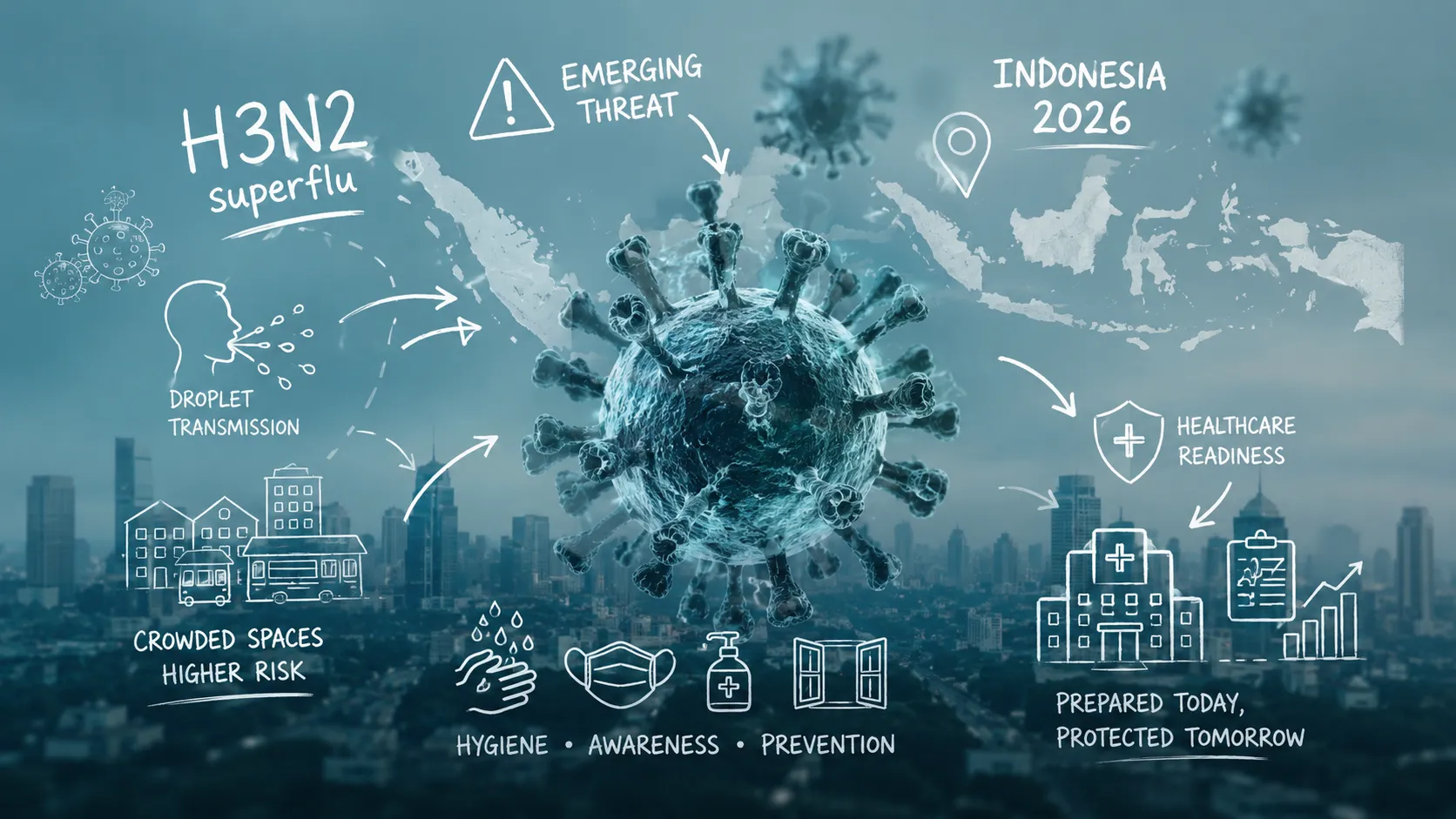

“What if a flu we’ve always considered mild suddenly spreads faster and feels much more severe?” That question became real in Indonesia in 2026, when a phenomenon known as superflu, identified as Influenza A H3N2, began to draw public attention.
In a short time, many people reported symptoms such as high fever, severe coughing, and extreme fatigue, even after simply going about their daily routines in places like schools or on public transportation.
This situation sparked new concerns and made people rethink how they view common illnesses. What used to feel ordinary suddenly seemed more serious, showing that even familiar diseases can become more disruptive than expected.
I believe that the emergence of Influenza A H3N2 superflu in Indonesia in 2026 is not just a health issue, but also a test of our preparedness and responsibility as a society.
The real impact depends on how we respond—whether we remain alert and cautious or become careless and overwhelmed by panic.
The Rapid Spread of the Virus
Furthermore, one of the main reasons this issue is important is the speed at which the virus spreads. It can be transmitted easily through droplets from coughing or sneezing, especially in crowded places like schools, campuses, and public transportation.
When many people share the same space, the risk of infection increases significantly.
Logically, the higher the level of public mobility, the greater the chance for the virus to spread rapidly.
Also Read: 7 Cara Menghindari Infeksi Saluran Pernapasan bagi Mahasiswa
This is why collective awareness is significant. Simple actions, such as maintaining hygiene and being mindful when feeling unwell, can help reduce transmission.
Healthcare Readiness and Public Awareness
In addition, research shows that although many cases are mild, this variant can still cause more severe symptoms in vulnerable groups such as children, the elderly, and those with weaker immune systems.
This can lead to an increase in patients seeking medical care, and if not managed properly, healthcare facilities may become overwhelmed.
Therefore, both healthcare readiness and public awareness play a crucial role in handling this situation.
Author: Regita Aura Baitti
Student of the Public Sector Accounting, Harkat Negeri University
Editor: Nilam Indahsari
Language Editor: Rahmat Al Kafi
⚡ Baca Lebih Cepat Artikel MMI di Ponsel Anda!
Ikuti Channel WhatsApp
Media Mahasiswa Indonesia (MMI):
KLIK DI SINI