
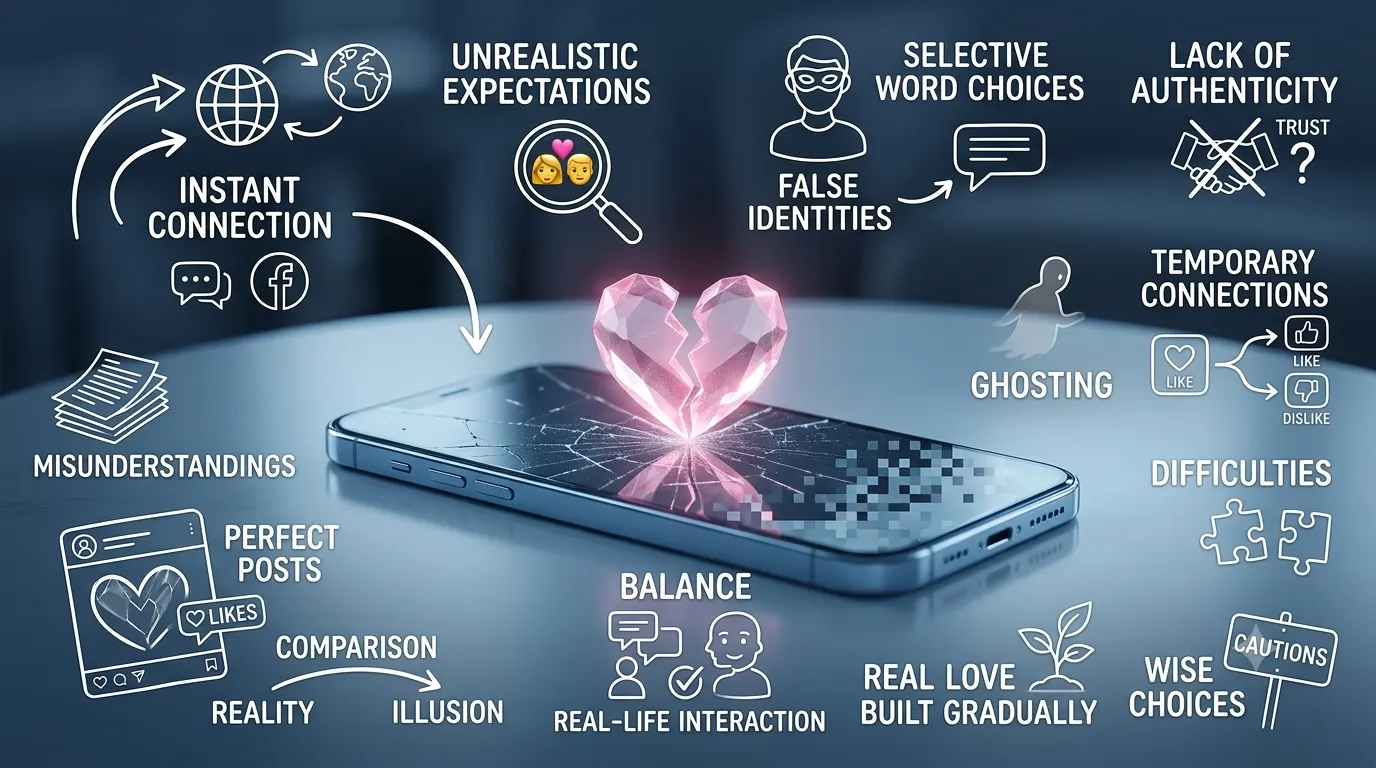

In this fast-paced digital age, people are no longer limited by time or distance when it comes to building connections. Through a smartphone screen, someone can easily talk to and interact with people from different parts of the world within seconds. Social media, dating apps, and online communication platforms have completely changed the way people create emotional bonds and experience closeness with others.
Today, many friendships and romantic relationships begin online before they ever exist in real life. Technology has made communication faster, easier, and more convenient than ever before.
However, behind all this convenience, a new phenomenon has started to grow: the rise of “hopeless romantics” in the virtual world, where many people become attached to the idea of perfect love created through online interactions. While the internet offers opportunities to connect with others, it also encourages unrealistic expectations that can make people vulnerable to disappointment and emotional pain.
Online interactions often do not fully represent a person’s true character. In online communication, people usually choose what they want others to see. They often present only the best version of themselves by posting attractive photos, sharing happy moments, and carefully selecting their words.
At the same time, they may hide their weaknesses, personal struggles, or even create an identity that is different from who they really are. Because of this, people may easily fall in love with an image or personality that does not truly exist. This can create misunderstandings and unreasonable expectations for those involved in a relationship who are emotionally vulnerable.
Research has shown that relationships developed mainly through online communication without regular face-to-face interaction are more likely to experience disappointment because they often lack authenticity, trust, and deeper emotional understanding. Without meeting in person, it becomes more difficult to understand someone’s true personality, behavior, and intentions.
In addition, the internet allows people to connect with others very quickly, but many of these connections are often shallow and temporary. Dating applications provide users with hundreds of potential matches, making it easy to start conversations with many different people.
While this creates more opportunities to meet someone, it also encourages people to move from one conversation to another without building meaningful emotional commitment. Several studies on digital relationships suggest that around 40–50% of relationships that begin online never develop into serious relationships in real life.
Many users also report experiencing “ghosting,” a situation where someone suddenly disappears and stops communicating without any explanation. This experience often leaves feelings of sadness, confusion, rejection, and disappointment. Even when two people communicate every day through messages or video calls, this does not necessarily mean they share the same level of commitment.
In reality, healthy relationships require trust, honesty, mutual effort, shared experiences, and effective communication qualities that are difficult to develop completely through a screen. As a result, people who search for love online can easily become emotionally attached to relationships that may not have a stable or genuine foundation.
Another factor that strengthens this illusion is the influence of social media. Every day, people are exposed to pictures and videos of seemingly perfect couples enjoying romantic vacations, celebrating anniversaries, or giving each other expensive gifts. Although these posts only show selected highlights, many people compare their own relationships with what they see online.
Hopeless romantics are especially vulnerable because they naturally desire ideal love stories. They may believe that true love should always feel exciting, effortless, and perfect. Unfortunately, real relationships involve disagreements, misunderstandings, compromise, and personal growth. When reality fails to match the ideal image they have created, feelings of dissatisfaction and frustration can appear. Instead of appreciating genuine connections, some people continue searching for a fantasy that may never exist.
However, some people believe that the internet actually gives individuals more opportunities to find the right partner because they can connect with others without being limited by distance, culture, or time. There are many successful stories of couples who first met online and eventually built happy marriages.
Technology can also help shy or introverted individuals express themselves more confidently and communicate with people they might never have met otherwise. Online communication allows people to build emotional intimacy through shared interests, meaningful conversations, and continuous support.
Therefore, it would be unfair to say that all online relationships are unhealthy or fake. The problem does not lie in the technology itself but in the unrealistic expectations that some users develop. When people mistake online affection for deep commitment without truly knowing the other person, they become more likely to experience emotional disappointment.
Ultimately, the digital world makes it easier for people to form relationships because they can communicate anytime and connect with others from different places. Nevertheless, online relationships can also create emotional illusions, particularly for individuals who are highly romantic and tend to expect love to be flawless.
Social media and online communication usually highlight only the happiest moments of a relationship while hiding conflicts, misunderstandings, and emotional struggles.
Consequently, relationships that appear perfect on a screen do not always reflect the reality of love and commitment in everyday life. Genuine love is built gradually through honesty, patience, respect, and shared experiences rather than through carefully edited messages or idealized online images.
Therefore, it is important for people to be careful and wise when building relationships in the digital world. We should not easily believe romantic words or promises without seeing consistent honesty, responsibility, and genuine effort from the other person.
It is equally important to balance online communication with real-life interaction whenever possible. Taking time to truly know someone before becoming emotionally attached can reduce misunderstandings and unrealistic expectations.
At the same time, people should remember that no relationship is perfect because every healthy relationship requires communication, compromise, and mutual respect. By maintaining realistic expectations and prioritizing authenticity over fantasy, we not only protect our own emotional well-being but also create greater opportunities to build sincere, lasting, and meaningful relationships that can survive both online and offline.
Author: Jundia Fayyaza
D4 Public Sector Accounting Student, Harkat Negeri University
Instructor: Muchammad Sofyan Firmansyah, S.S.
Editor: Salwa Alifah Yusrina
Bahasa: Rahmat Al Kafi

⚡ Baca Lebih Cepat Artikel MMI di Ponsel Anda!
Ikuti Channel WhatsApp
Media Mahasiswa Indonesia (MMI):
KLIK DI SINI