
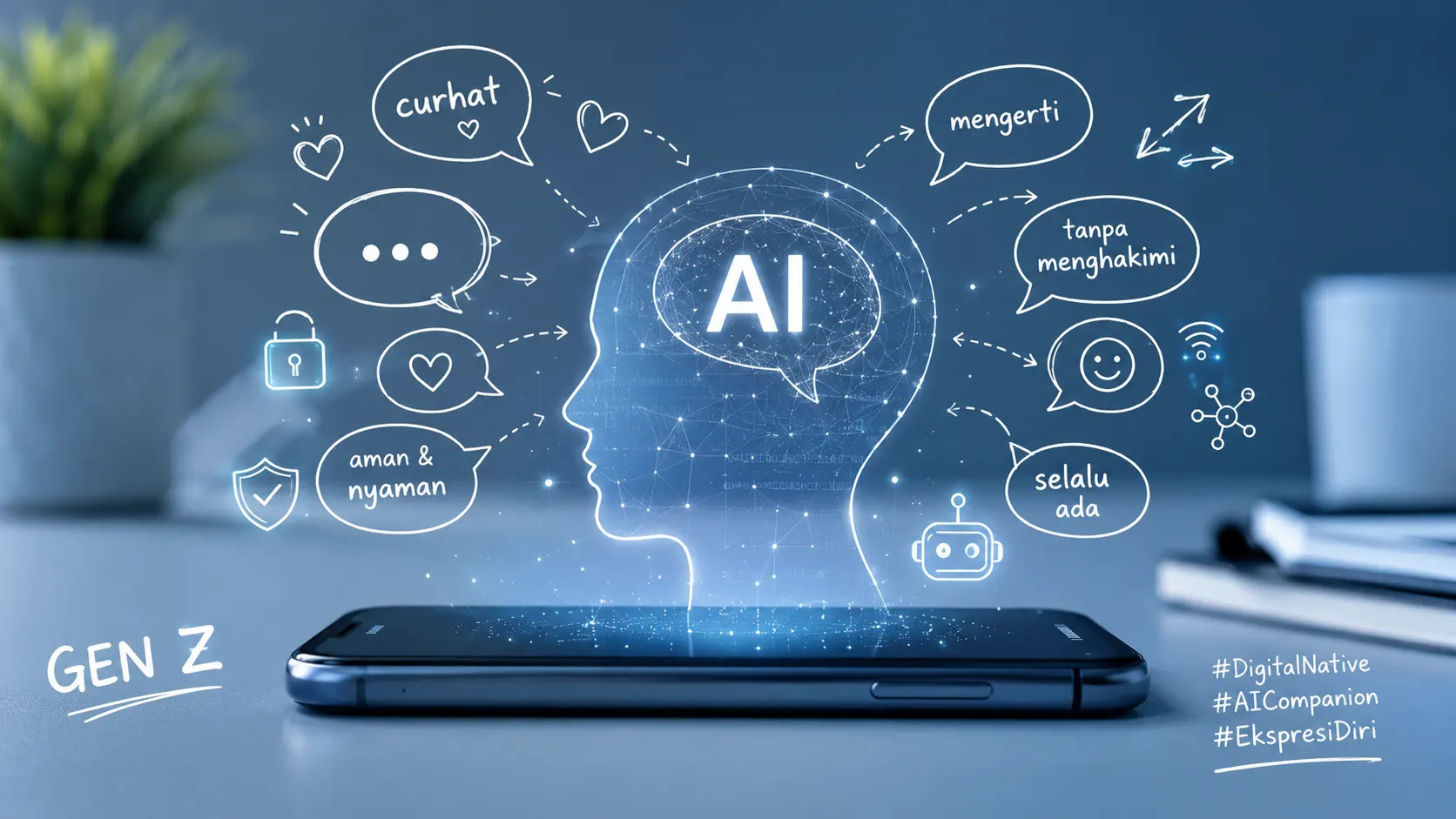

Lately, artificial intelligence has been gaining popularity. More and more members of Generation Z are beginning to use AI as a means to express their innermost thoughts and feelings. This change signals a shift in communication patterns and methods influenced by the development of digital technology.
Over time, confiding in artificial intelligence has come to be seen as a new way of self-expression, as it is considered safer and more comfortable than face-to-face interaction.
This phenomenon shows that AI has taken on a significant role among Generation Z and is more than just a passing trend. It reflects a change in communication behavior that has the potential to influence how individuals express their emotions and form relationships in the digital age.
Generation Z is a generation that has grown up in an environment heavily reliant on technology, so their communication patterns also differ from those of previous generations. Digital platforms offer a freedom that allows users to feel more at ease expressing their thoughts.
This makes them feel safer and more protected. Additionally, online communication can alleviate fears related to things beyond one’s control, such as the fear of being judged or misunderstood. Therefore, it’s no surprise that some people prefer to pour out their hearts to artificial intelligence.
The need for validation is also a contributing factor. Often, users who turn to AI as a confidant are individuals who tend to be quiet and reserved. They are not accustomed to or feel uncomfortable sharing their thoughts and feelings with others.
Baca Juga: Mengenal Baterai Rechargeable dan Non-Rechargeable dari Sudut Pandang Elektrokimia
In addition, the role of parents in a child’s growth and development also influences how children express their opinions. Children who grow up in a less nurturing environment tend to be more withdrawn.
They are often prone to loneliness and constantly seek someone who will listen to them. In this context, AI serves as a medium that is perceived as safe and capable of protecting its user’s privacy.
Artificial intelligence also provides quick responses that align with user’s expectations, making them feel that their feelings are validated and heard. AI offers neutral, non-judgmental responses, which encourage individuals to be more open.
However, excessive reliance on digital interactions can reduce face-to-face social interaction, potentially diminishing an individual’s ability to form relationships in real life.
However, it is important to understand that artificial intelligence has its limitations. AI cannot understand human emotions as deeply as humans themselves, so its responses tend to be general in nature. If someone relies too heavily on AI, they may become less accustomed to interacting directly with others.
Baca Juga: Cara Baru Generasi Z Memandang Pekerjaan sebagai Batu Lompatan Karier
As a result, the ability to build genuine relationships and understand other’s feelings may diminish. Therefore, while AI can be helpful, the human role remains crucial in providing deeper and more meaningful emotional support.
Overall, the increasing use of artificial intelligence as a medium for emotional expression among Generation Z reflects changing communication patterns in the digital age.
Therefore, it is important for individuals especially the younger generation to use technology wisely while maintaining a balance between digital interactions and face-to-face communication.
Additionally, educational institutions and society at large must play a role in fostering the development of social and emotional skills so that technological advancements do not diminish the quality of human relationships.
Penulis: Karenina Nanda Chitra Lestari (25110005)
Mahasiswa Akuntansi Sektor Publik Universitas Harkat Negeri (UHN)
Dosen Pengampu: Muchammad Sofyan Firmansyah
Editor: Ika Ayuni Lestari
Bahasa: Rahmat Al Kafi

⚡ Baca Lebih Cepat Artikel MMI di Ponsel Anda!
Ikuti Channel WhatsApp
Media Mahasiswa Indonesia (MMI):
KLIK DI SINI