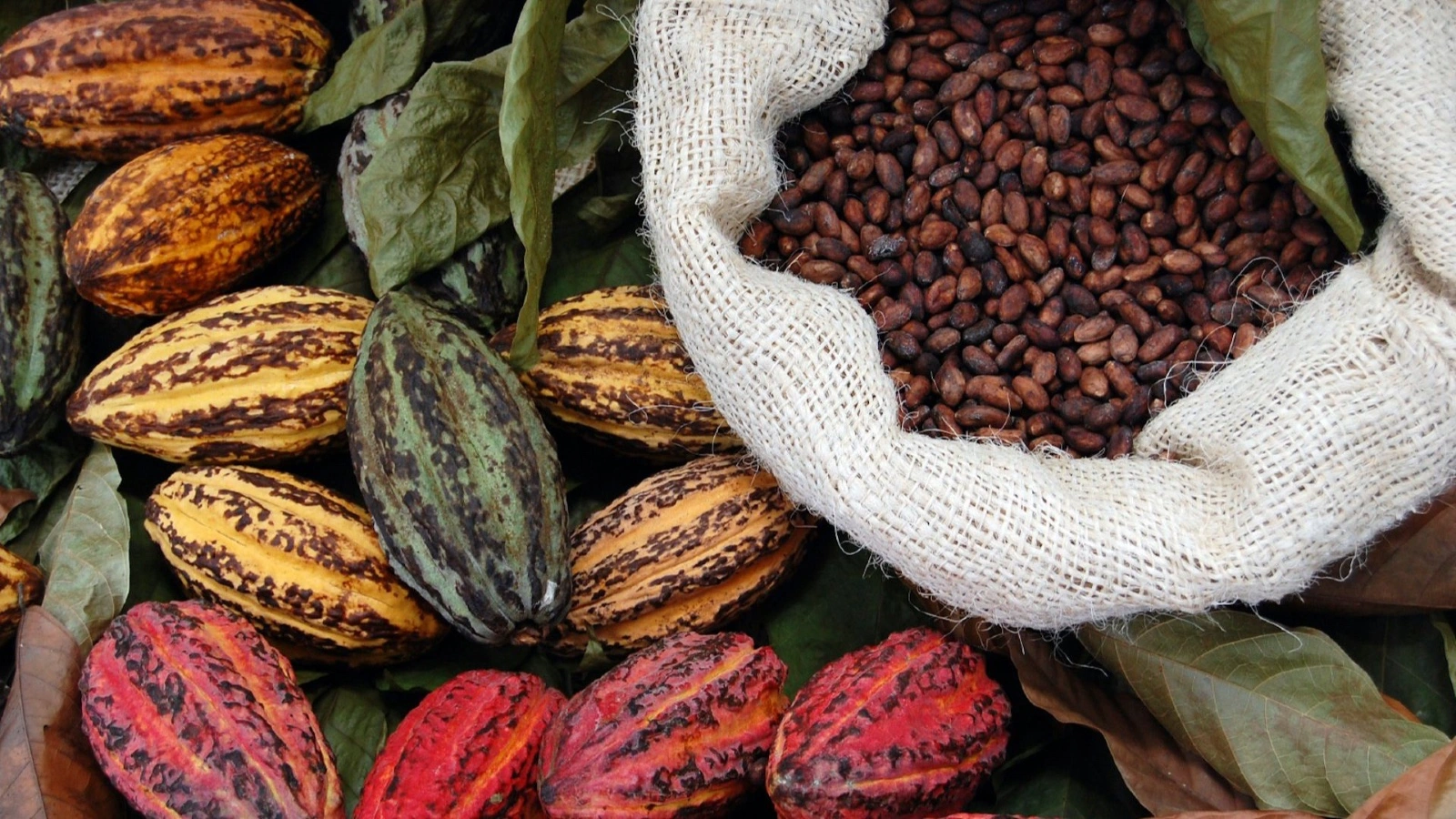

Chocolate is universally associated with luxury, celebration, and joy. Yet, behind the sweet treats we enjoy today lies a harsh reality that has dominated international relations discussions throughout 2020. Amid a multi-billion-dollar global industry, millions of cocoa farmers in developing nations are still struggling just to meet their daily basic needs.
The year 2020 marks a crucial turning point. While the world is preoccupied with unprecedented global supply chain disruptions, the issue of cocoa sustainability is taking center stage in economic diplomacy.
Global Warnings and the Paradox of Cocoa
Looking at the political and economic developments this year, international organizations are sounding the alarm. The United Nations (UN) has declared 2020 as the dawn of the Decade of Action to accelerate the Sustainable Development Goals (SDGs), making the cocoa sector a major focal point due to its inherent paradoxes.
This irony becomes even more apparent when we listen to the warnings from the World Food Programme (WFP), which has highlighted the extreme vulnerability of agricultural communities in developing countries. It is deeply ironic that the very farmers producing the raw materials for a high-value food industry are often the ones standing on the edge of food insecurity whenever global market prices collapse.
At the same time, the Food and Agriculture Organization (FAO) consistently emphasizes the urgency of agricultural reform. The FAO notes for 2020 stress that the well-being of smallholder farmers is the master key to both food security and environmental conservation, signaling that exploitative farming practices that degrade forests are no longer tolerated by the global market.
The mounting pressure from institutions like the UN and FAO has emboldened producing countries to take a firm stance. Ivory Coast and Ghana, which account for over 60 percent of global cocoa production, have pushed forward the Living Income Differential (LID) policy as a mandatory premium charged to multinational corporations to ensure farmers receive a rational and fair purchasing price.
This move is a bold maneuver in international diplomacy, pressuring consumer nations to shoulder their share of responsibility for farmer welfare. World trade policies in 2020 are no longer just about export tariffs; they are actively entering the realm of human rights.
The cocoa sustainability agenda currently making waves globally is deeply intertwined with several core SDG pillars.
SDG 1: No Poverty
The primary focus of cocoa economic diplomacy in 2020 is securing a living income for farmers through social safety nets and fair pricing to lift them out of structural poverty.
SDG 8: Decent Work and Economic Growth
Achieving SDG 8 means eradicating child labor in cocoa plantations, which has become a non-negotiable condition in international trade negotiations.
SDG 15: Life on Land
Aligned with SDG 15 and responding to FAO warnings on deforestation, international relations are now geared toward halting forest degradation, with European nations strictly enforcing traceability certifications for every exported cocoa bean.
As one of the world’s largest cocoa-producing nations, Indonesia feels the immediate impact of shifting global standards. From the plantations in the eastern regions to the high-potential cocoa hubs in Aceh, farmers are challenged to rapidly adapt to sustainable farming practices.
Throughout 2020, domestic collaboration has slowly begun to take root through the rejuvenation of aging cocoa trees and the distribution of eco-friendly fertilizers. More importantly, there is a growing movement toward building resilient industrial models in rural areas.
Focusing on value-added processing ensures that economic benefits remain within the producing regions while empowering the younger generation to see agriculture as a viable, modern career. This perfectly captures the collaborative spirit of SDG 17 (Partnerships for the Goals).
The traditional international trade model has historically favored massive corporate structures while overlooking the transformative power of entrepreneurs from small regions. However, the crises of 2020 are proving that top-heavy systems are inherently fragile.
The path forward requires a fundamental shift in the business narrative, moving away from an exclusive focus on corporate achievements toward humanitarian and village-based business initiatives. When local agricultural leaders take the helm, they do not just trade commodities—they build localized ecosystems that prioritize community resilience and equitable wealth distribution.
This grassroots transformation is the absolute cornerstone of building truly resilient industrial models in rural areas. It is not enough to simply improve farming techniques at the surface level. True agribusiness transformation requires integrating comprehensive agri-logistics hubs with dedicated human capital development right at the source.
A sustainable cocoa supply chain goes beyond fair prices and environmental certifications because it fundamentally requires building holistic community resilience at the grassroots level. When unprecedented challenges arise—whether from volatile market shifts, sudden regional crises, or extreme weather events—farmers need much more than agricultural inputs or top-down directives.
They require robust, localized support systems that encompass coordinated emergency relief, efficient logistics distribution, volunteer coordination, and vital psychosocial support. By weaving these humanitarian elements into the very fabric of village-based agribusiness models, local enterprises can create a reliable safety net that protects both economic livelihoods and the overall well-being of farming communities.
Systemic Resilience and Industrial Sovereignty
From a structural perspective, the cocoa value chain functions as a complex socio-economic system where rent capture is disproportionately concentrated in the downstream processing and retail segments. The systemic shocks of 2020 demonstrate the fragility of this linear, extraction-oriented model, necessitating a paradigm shift toward producer-inclusive governance.
By decentralizing processing capacities, producing regions can transition from passive suppliers of primary commodities to active stakeholders in mid-stream value chain segments. This structural reorientation is mathematically essential for internalizing economic rents and fostering endogenous growth within producing districts, effectively shifting the nexus of value creation from global retailers back to localized industrial nodes.
Furthermore, the resilience of rural cocoa economies is intrinsically linked to the deployment of socio-technical systems that bridge the gap between production and market intelligence. Empirical evidence suggests that when rural enterprises operate as modular hubs—integrating logistics, quality control, and human capital development—they significantly reduce transaction costs and mitigate information asymmetry.
This socio-technical synergy transforms a village from a subsistence-oriented unit into a high-functioning industrial node. By optimizing input-output efficiency through local value-added processing, these hubs insulate local economies from the exogenous price shocks that have historically crippled the cocoa sector, creating an institutional buffer that ensures operational continuity during periods of extreme global volatility.
Finally, the sustainability of this entire transition is underpinned by the principles of endogenous growth theory, which posits that investments in human capital—including vocational training, managerial expertise, and psychological resilience—are the primary determinants of long-term economic development.
In the context of the current global shift, human capital extends beyond simple labor utility to encompass the institutional knowledge and innovative capacity of local actors. When agricultural leaders prioritize the development of these human assets, they catalyze a virtuous cycle in which technical proficiency attracts capital and institutional stability, ultimately creating a self-sustaining development model that is resistant to the failures of traditional top-down development strategies.
Key Imperatives for the Future
To ensure that this global agricultural transformation translates into lived realities rather than merely diplomatic rhetoric, international relations in the cocoa sector must focus on several key imperatives moving forward.
Empowering Village-Based Economies
Small regions must no longer be treated as the bottom rung of the extraction chain. Establishing localized agri-logistics hubs will transform rural areas into resilient industrial centers capable of withstanding global market volatility.
Accelerating Value-Added Processing
Implementing downstreaming strategies directly at the source guarantees that the wealth generated by cocoa cultivation stays within producing communities, securing long-term economic independence.
Prioritizing Human Capital Development
Cultivating a sustainable industry requires nurturing the people behind it. Adopting a humanitarian approach that prioritizes community welfare, skill building, and localized support systems will attract the younger generation back to agriculture.
Strengthening Transparent Cooperation
Global institutions and consumer nations must consistently uphold commitments to economic justice, ensuring that fair pricing mechanisms become a permanent fixture of international trade.
Ultimately, the dynamics of international relations in 2020 teach us that true global resilience begins with empowering local entrepreneurs and farmers at the grassroots level. By committing to these targeted actions, we hold onto a profound hope that the lives of these food heroes will gradually become as sweet as the chocolate they produce.
Writer: Rizky Abdilah (NIM: 106218053)
International Relations Student at Pertamina University

⚡ Baca Lebih Cepat Artikel MMI di Ponsel Anda!
Ikuti Channel WhatsApp
Media Mahasiswa Indonesia (MMI):
KLIK DI SINI