
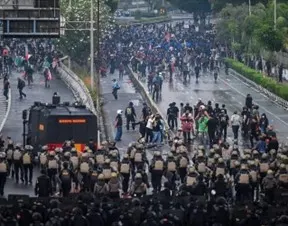

The massive demonstrations that shook Indonesia from August 25 to early September 2025 became one of the most significant social and political events in the country’s recent history. What began in Jakarta quickly spread to Bandung, Yogyakarta, Surabaya, Makassar, Medan, and Palembang.
Thousands of students, laborers, online motorcycle taxi drivers, and ordinary citizens took to the streets with one shared message: a demand for justice and equality.
The main trigger was the revelation of a new housing allowance for members of parliament, amounting to 50 million rupiah per month. The policy was considered insensitive, especially as food prices continued to rise, unemployment remained high, and wages stagnated.
Public frustration that had long been simmering finally erupted after the news went viral on social media. In many cities, students led peaceful marches carrying signs that read “The People’s Money is Not for Luxury” and “We are Hungry, They are Living in Comfort.”
Tensions escalated on the night of August 28 when a 21-year-old motorcycle taxi driver named Affan Kurniawan was killed after being struck by a police tactical vehicle near Senayan, Jakarta.
The video of the incident spread rapidly online, sparking nationwide outrage. Within hours, the demonstrations that had focused on parliamentary privilege transformed into a broader movement against injustice and police brutality.
According to data from the Indonesian Legal Aid Foundation (YLBHI), between August 25 and September 1, more than 3,300 protesters were detained, over 1,000 were injured, and at least 10 people were confirmed dead, including Affan Kurniawan.
Human Rights Watch reported that around 20 people remained missing, while property damage from riots and looting was estimated to reach nearly 900 billion rupiah. In several cities, initially peaceful protests turned chaotic.
In Bandung and Makassar, local parliament buildings and government vehicles were set ablaze. In Yogyakarta, shops and convenience stores were looted after clashes between police and demonstrators lasted late into the night. Photographs from the scene captured thick black smoke filling the air and riot police firing tear gas into the crowds.
Many observers described the tragedy as a reflection of deep-rooted social tension. The growing economic inequality, rising youth unemployment, and perception of elitist governance fueled public anger. Security forces, instead of building dialogue with the demonstrators, were criticized for excessive use of force that worsened the unrest.
Still, not every protest ended in violence. In cities like Surabaya and Semarang, students and police managed to maintain peaceful dialogue. Many student leaders condemned acts of vandalism and reminded others that their struggle was for transparency, not destruction.
These moments showed that Indonesia’s democratic spirit remains alive even under pressure. As the situation calmed down in early September, the government formed a National Investigation Team to examine alleged human rights violations during the protests.
The President expressed condolences to the families of victims and promised a comprehensive review of parliament’s policies. Yet the public remains skeptical, waiting to see whether those promises will lead to real accountability.
The demonstrations of August 2025 should serve as a mirror for the nation. Democracy is not only about voting every five years but also about the freedom to speak out against injustice without fear of suppression. The people who fill the streets are not enemies of the state; they are the conscience of a nation demanding to be heard.
The demonstrations that shook Indonesia between late August and early September 2025 revealed two crucial truths. First, that the Indonesian people have not lost their courage to speak out in the face of injustice. Second, that the nation’s democracy remains fragile when power fails to listen.
The death of Affan Kurniawan has become a symbol of how costly justice can be in Indonesia. He represents not only a victim of violence but also the voice of the working class struggling for dignity amid systemic inequality.
Baca Juga: Berdemokrasi dengan Suara Rakyat: Tantangan Kebebasan Berekspresi dan Hak Asasi di Era Modern
The government’s task now is not simply to calm public anger but to address the root causes of it: social inequality, economic hardship, and lack of accountability in governance.
If these lessons are ignored, history will repeat itself, and the streets will once again fill with voices demanding change. True democracy is not defined by who holds the most power but by who listens the most sincerely.
Penulis: Azahra Dwi Jayanti
Mahasiswa Akuntansi Sektor Publik Universitas Harkat Negeri
Editor: Ika Ayuni Lestari
Bahasa: Rahmat Al Kafi
Ikuti berita terbaru Media Mahasiswa Indonesia di Google News

⚡ Baca Lebih Cepat Artikel MMI di Ponsel Anda!
Ikuti Channel WhatsApp
Media Mahasiswa Indonesia (MMI):
KLIK DI SINI