
Abstract
Urban development in Pekanbaru is increasingly reducing natural green spaces, highlighting the need for sustainable nature-based tourism areas within the city.
Argopuro Rumbai is one such destination that combines environmental conservation with educational and recreational activities.
This study analyzes the tourism attractions and hunting practices implemented in Argopuro Rumbai to understand how the area maintains ecological, social, and economic balance.
This research used a qualitative descriptive approach through direct observation, semi-structured interviews with managers, residents, and visitors, and documentation of environmental conditions and facilities.
Data were analyzed using the Miles and Huberman interactive model, which consists of data reduction, data presentation, and verification of conclusions.
The findings indicate that Argopuro Rumbai offers a unique combination of natural scenery, outdoor educational programs, and private tourism services.
Management prioritizes ecosystem health, identified by the presence of natural vegetation and implements strict visitor management. Community empowerment is also evident, with 90% of staff recruited from the local area.
However, several challenges remain, including limited human resources, underdeveloped facilities, and inadequate digital promotion, which hinder wider recognition and optimal development of the site.
In conclusion, Argopuro Rumbai has strong potential as a model for eco-educational tourism in Pekanbaru.
Strengthening government collaboration, environmental monitoring, academic partnerships, and the involvement of MSMEs is recommended to enhance viability and ensure long-term tourism sustainability.
Keywords: Argopuro Rumbai, Eco-Educational Tourism, Tourism Ecosystem
Introduction
Over the past decade, global discussions on sustainable tourism have increasingly emphasized the importance of balancing economic growth with environmental preservation and community well-being.
Tourism is now widely recognized as a double-edged sword. While it can stimulate local economies and create jobs, it can also lead to environmental degradation if not managed properly.
Therefore, the paradigm of sustainable tourism has shifted from simply attracting visitors to ensuring that tourism activities respect ecological boundaries and cultural authenticity.
According to the United Nations World Tourism Organization (UNWTO, 2018), sustainability in tourism development must encompass environmental protection, cultural preservation, social inclusion, and economic equity as interrelated objectives.
In Indonesia, this paradigm has gained significant traction because many tourist destinations are located in ecologically sensitive areas.
The country’s diverse landscape, from coastal areas to highlands, demands a tourism model that aligns recreation with conservation.
Urban-based nature tourism is crucial in this regard, providing accessible recreational spaces for residents while preserving green areas that contribute to environmental balance.
Pekanbaru, the capital of Riau Province, is a compelling example, as it continues to develop as an urban center yet still boasts several nature tourism destinations that offer both educational and recreational value. One prominent example is the Argopuro Rumbai area.
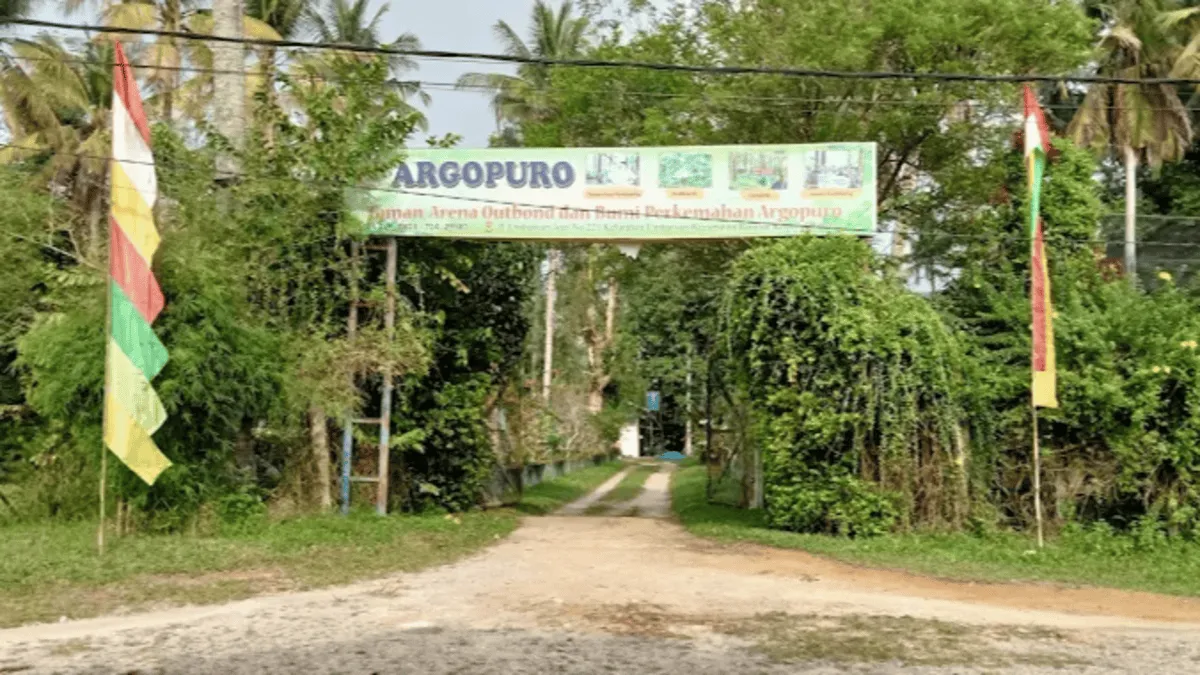
Argopuro Rumbai is a privately managed tourist area located in Rumbai District, an area once dominated by forest that has now been converted to housing and industrial activities.
Despite rapid urbanization, Argopuro has managed to preserve extensive green spaces where visitors can interact directly with nature.
The area adopts a unique eco-educational tourism concept, combining outdoor recreation such as outbound training, camping, and environmental workshops with ecological learning experiences.
Visitors are not only invited to enjoy the scenery but also encouraged to understand the importance of biodiversity, waste management, and sustainable living.
This concept aligns with the broader goal of environmental education, which is to foster awareness and behavioral change towards sustainability.
Argopuro Rumbai contributes to the city’s environmental and educational landscape. For students, it offers an alternative learning environment outside the classroom.
For families and organizations, it provides a recreational space that encourages physical and ecological engagement.
Furthermore, the site serves as an informal conservation area, helping preserve local flora and fauna.
From a management perspective, Argopuro demonstrates that small-scale, community-oriented initiatives can effectively implement sustainability principles, even without significant institutional funding.
However, challenges remain. Based on initial interviews with site managers, several issues are hampering the area’s optimal development.
Limited human resources have impacted operational efficiency and digital marketing efforts.
Some infrastructure components, such as parking areas and visitor facilities, remain underdeveloped due to financial and environmental considerations.
Furthermore, a lack of ongoing government collaboration has resulted in minimal promotion and policy support.
This reflects the broader struggles faced by independent tourism operators in maintaining sustainability while ensuring business continuity.
At the same time, the environmental dimension of Argopuro Rumbai requires consistent attention.
As a green open space, the area faces pressures from changes in land use and visitor activity in the surrounding area.
Maintaining ecosystem health, such as waste control, vegetation preservation, and water resource protection, is crucial to ensuring that tourism development does not compromise ecological integrity.
Local community participation in managing and utilizing tourism activities is another key factor for success. When communities are directly involved, sustainability efforts tend to be more effective and sustainable.
Given this situation, a comprehensive analysis of the tourist attractions and the sustainability of the tourism ecosystem in the Argopuro Rumbai area is crucial.
This study uses a qualitative descriptive approach through observation, interviews, and documentation to gain a holistic understanding of how the area operates, the challenges faced, and how sustainability principles are applied in practice.
This analysis aims to uncover the strengths and weaknesses of current management practices and formulate recommendations for future improvements.
Ultimately, this research contributes to the broader discourse on sustainable urban tourism in Indonesia.
By exploring Argopuro Rumbai as a case study, this research highlights how small-scale destinations can play a significant role in increasing ecological awareness and community participation.
These findings are expected to serve as a reference for policymakers, tourism practitioners, and educators in developing integrated strategies that support environmental conservation and tourism development.
Literature Review
2.1 Concept of Tourist Attractions
Tourist attractions are the core elements that drive visitors to a destination, and the same applies to the Argopuro Rumbai area.
Cooper (2008) explains that tourist attractions consist of natural, cultural, and man-made components that generate interest and enjoyment among tourists.
In the context of Argopuro Rumbai, this can include landscapes, rivers, forest areas, and recreational areas that offer aesthetic and educational value.
The attractiveness of a tourist destination is shaped not only by physical features but also by how these features are managed, maintained, and made accessible to visitors.
Accessibility, supporting facilities, security, and the availability of tourism activities significantly influence visitor satisfaction.
Given that Argopuro Rumbai is primarily a nature-based tourist site, its attractions emphasize natural beauty, diverse flora and fauna, and opportunities for outdoor recreation such as sightseeing, photography, and learning about the local ecosystem.
Therefore, the development of tourist attractions in Argopuro Rumbai must prioritize balanced planning that enhances scenic value while ensuring visitor experience and ecological protection.
2.2 Ecotourism and Sustainability
Sustainable tourism provides a crucial foundation for the development of nature-based destinations like Argopuro Rumbai.
According to the UNWTO (2018), sustainable tourism seeks to meet the needs of current tourists and host communities without compromising future opportunities.
This principle is particularly relevant in Argopuro Rumbai, where tourism activities directly impact the natural environment and local communities.
In this context, sustainability encompasses environmental, social, and economic dimensions that must be balanced.
Environmentally, sustainable tourism emphasizes forest conservation, water quality maintenance, wildlife protection, and prevention of habitat degradation caused by increased tourism activity.
From a social perspective, sustainability highlights the importance of engaging local communities, strengthening cultural appreciation, and ensuring that residents receive meaningful social and cultural benefits from tourism.
Economically, sustainability is concerned with promoting local entrepreneurship, creating jobs, and ensuring that tourism revenues contribute to the well-being and empowerment of local communities.
For Argopuro Rumbai, implementing these dimensions means ensuring that visitor activities remain within the area’s ecological carrying capacity, preventing overexploitation of natural resources.
Buckley (2018) further emphasizes that sustainable tourism requires ongoing environmental monitoring, visitor education, and adaptive management to effectively respond to environmental pressures.
By implementing these principles, the Argopuro Rumbai area can remain environmentally sustainable, socially beneficial, and economically viable in the long term.
2.3 Tourism Ecosystem
The tourism ecosystem in Argopuro Rumbai consists of interconnected relationships between tourists, the natural environment, and the local community.
Butler (1999) describes the tourism ecosystem as a dynamic system in which environmental and human components influence each other in a sustainable manner.
This is evident in Argopuro Rumbai, where natural resources such as land, water, vegetation, and wildlife serve as the foundation for tourism activities.
Local communities contribute cultural identity, local knowledge, services, and hospitality. In return, tourists benefit economically through their spending, but their activities can also create environmental pressures, such as litter generation, trail erosion, and noise disturbance.
If not managed properly, these pressures can disrupt the ecological balance and diminish the quality of the tourism experience.
Maintaining harmony between these components requires integrated planning and active community participation.
Effective management of the tourism ecosystem in Argopuro Rumbai includes efforts to limit environmental damage, support sustainable livelihoods for local residents, and provide educational experiences that foster environmental awareness among visitors.
A resilient tourism ecosystem ensures that Argopuro Rumbai can continue to function as a sustainable and attractive nature-based tourism destination
Research Method
This study employed a descriptive qualitative design, which aims to explore phenomena in depth based on what actually happens in the field.
As noted by Sandelowski (2000), descriptive qualitative research seeks to present a clear and detailed picture of a real-life situation without adding unnecessary interpretations.
Creswell (2014) also points out that qualitative research is appropriate when the goal is to understand the meanings, perspectives, and experiences from the perspectives of the people involved.
Therefore, this approach is appropriate for researching the Argopuro tourist area, as it allows researchers to comprehensively capture the actual conditions, visitors’ impressions, and insights from the local community.
This research was conducted in the Argopuro Tourism Area in Rumbai, Pekanbaru, Riau. The data collection schedule was structured to ensure observations could be conducted under suitable conditions, ensuring the most accurate information possible.
Primary data was obtained through field observations and interviews with several key respondents, including tourism managers, local residents, and tourists.
Several techniques were used to collect data. First, direct observation focused on identifying tourist attractions, available facilities, and the general environmental situation.
Spradley (1980) emphasized that observation allows researchers to understand activities and behaviors as they occur naturally in real environments.
Patton (2002) also explained that qualitative observation allows researchers to “see things as they naturally exist,” which is particularly useful for evaluating tourism environments.
The second technique is semi-structured interviews, which are used to obtain more in-depth information about participants’ experiences, perspectives, and involvement in tourism activities.
According to Kvale (1996), semi-structured interviews offer a balance between directed questions and flexibility, allowing researchers to pursue emerging issues while maintaining a clear direction.
Cohen and Manion (1994) add that this type of interview is suitable for social research that requires structured directions and open-ended responses.
Another method used is documentation, which consists of photographs, field notes, and various supporting materials.
Bowen (2009) emphasizes that documentation provides an important additional source of data, as it provides visual and textual evidence that supports and validates findings from interviews and observations.
Data were analyzed using an interactive model proposed by Miles and Huberman (1994). The analysis began with data reduction, where information collected from the field was sorted and organized to highlight relevant points.
This was followed by data presentation, where the reduced data were arranged in a clear and systematic format for easy interpretation.
The final step involved drawing and validating conclusions, a process in which emerging patterns were interpreted and checked to ensure the accuracy and consistency of the findings.
Result and Discussion
4.1 Tourist Attractions in the Argopuro Rumbai Area
Argopuro Rumbai stands out with its unique blend of natural beauty, educational activities, and exclusive private tour options.
Argopuro Rumbai is designed as a green open space that combines fun and learning for everyone.
The manager explains that the main idea is to preserve nature and act as the “lungs” of Rumbai, which is especially important given the many new buildings popping up around it.
This demonstrates their genuine focus on preserving green spaces, which are increasingly scarce in urban areas, making it not only a place to relax but also a way to protect the environment.
There are many exciting things to try here. One of the main attractions is the outdoor adventure and private camping arrangements, where each group gets the entire site to themselves.
As the manager put it, “once a group books, we don’t let anyone else in…it’s all private.” This ensures privacy, security, and limits crowds to avoid disturbing the surrounding nature.
Then there’s the educational side, with programs like reptile handling, fish breeding, and beekeeping.
These programs aim to teach the public, especially children, about local wildlife and how to care for the planet.
The manager said, “We have reptile and beekeeping classes… and we plan to expand them to school groups,” demonstrating their dedication to combining fun with real-world knowledge.
The scenery itself is also a major attraction. There’s a children’s pool, a shady forest, and fruit orchards featuring langsat, rambutan, mangosteen, and durian.
Visitors can pick and eat ripe fruit right there, but the manager reminds everyone, “Once it’s ripe, you can enjoy it here, just don’t climb the trees.”
In addition to regular visits, they have begun hosting smaller outdoor events, such as garden weddings and private parties. This adds variety to the venue’s offerings without disrupting the surrounding environment.
Overall, Argopuro Rumbai combines nature, education, and a private setting to create a complete destination for visitors.
4.2 Management and Ecosystem Sustainability
The way Argopuro Rumbai keeps its ecosystem going strong is all about how it’s run. From what came out in the interviews, they purposely steer clear of official partnerships with the government to keep things running smoothly and dodge any red tape.
The manager put it like this “We handle everything professionally… bringing in government folks would just add too much bureaucracy” (Interview, 2025).
This gives them more freedom to decide on conservation and day to day stuff. That said, they’re not against teaming up later on, particularly with the tourism office, which has already popped by informally and shown some interest.
On the environmental side, there are clear signs that the ecosystem is doing well. The manager pointed out that natural plants like wild ferns and staghorn species are growing on their own, which usually only happens in spots with clean air and not much human interference.
“We have got wild ferns and staghorn plants sprouting naturally. We didn’t put them there, which proves the ecosystem is still in good shape,” the manager said. This points to the area keeping its natural balance intact.
Looking at the social and economic angle, Argopuro is a great example of tourism that’s rooted in the community.
About 90% of the workers are from the local area, which really boosts the neighborhood and spreads the money around fairly.
This matches up with what Kemenparekraf (2022) says about how getting locals involved is crucial for making tourism sustainable.
Having people from the community on board not only builds support but also helps protect the site’s natural goodies for the long haul.
4.3 Challenges and Weaknesses
Despite its strong ecological potential, the Argopuro Rumbai tourism area still faces several challenges that limit its optimal development. One of the main constraints is the limited human resources.
Although community empowerment is evident 90% of workers are recruited locally the shortage of trained personnel affects the efficiency of operations, visitor management, and the ability to expand educational programs.
This limitation also impacts marketing efforts, particularly in the digital domain, where promotional activities remain minimal.
Another key weakness is the underdeveloped infrastructure and supporting facilities. Several areas, such as parking spaces, visitor rest areas, signage, and accessibility pathways, require further improvement to align with the expectations of modern tourism standards.
The current facilities, while functional, do not yet fully support high visitor flow or large-scale educational programs, limiting the site’s competitiveness compared to other nature-based destinations.
In addition, Argopuro Rumbai faces challenges related to environmental management and protection.
Although the ecosystem is currently healthy, the site is surrounded by rapid urban development, which increases pressure on green areas.
Without consistent environmental monitoring especially related to waste management, visitor impact, and preservation of vegetation there is a risk that the natural balance could be gradually compromised.
Lastly, limited institutional collaboration hinders the site’s visibility and growth. The management’s intentional decision to avoid government involvement minimizes bureaucratic barriers but also restricts access to broader support networks, funding opportunities, and official tourism promotion channels. This makes it difficult to attract more visitors and educational institutions on a wider scale.
4.4 Sustainability Vision and Future Innovation
The sustainability vision for Argopuro Rumbai centers on maintaining its role as a green open space that serves ecological, educational, and community functions simultaneously.
From the management’s perspective, nature must remain the core attraction, meaning that conservation efforts must guide every future development decision.
This vision reflects a commitment to ensuring that the area remains the “lungs of Rumbai” amid increasing urbanization.
To strengthen sustainability, Argopuro Rumbai aims to enhance environmental stewardship by expanding programs related to biodiversity conservation, organic waste management, and habitat protection.
Innovations such as integrating ecological monitoring systems, developing eco-friendly pathways, and implementing visitor impact control strategies could further protect the ecosystem’s integrity.
In terms of social sustainability, the site plans to continue prioritizing community empowerment and educational engagement.
By expanding outdoor learning modules such as reptile education, beekeeping, and aquaculture the management envisions Argopuro as a regional center for environmental learning.
Future innovations may include curriculum-based ecological workshops for schools, collaborative events with universities, and training programs to develop skilled local ecotourism workers.
Conclusion
The analysis of the Argopuro Rumbai tourism area reveals that it holds significant potential as a model for eco-educational tourism within urban Pekanbaru.
Its unique ecosystem, diverse outdoor learning programs, and strong community involvement form a strong foundation for sustainable development.
The presence of natural vegetation, healthy biodiversity, and locally driven management reflects genuine ecological commitment.
However, several challenges such as limited human resources, insufficient facilities, and minimal promotional efforts must be addressed to maximize this potential.
Strengthening collaborations with government agencies, academic institutions, and MSMEs can help broaden the site’s visibility, support environmental monitoring, and enhance program development.
Moving forward, Argopuro Rumbai’s sustainability vision emphasizes harmonizing conservation, education, and community empowerment.
By encouraging innovation in eco-learning, green entrepreneurship, and digital outreach, the site can continue to grow into a resilient tourism ecosystem that benefits both nature and society.
With strategic improvements and sustained commitment, Argopuro Rumbai can evolve into a leading example of sustainable urban nature tourism in Indonesia.
On the economic side, future innovations involve diversifying tourism products through green entrepreneurship.
This includes offering eco-friendly souvenirs, supporting MSMEs through local product exhibitions, and developing sustainable event packages such as private eco-weddings, nature retreats, and educational camps.
Digital innovation is also part of the long-term vision, where improved online promotion, virtual tours, and social media branding can enhance visitor reach while maintaining environmental limits.
Argopuro Rumbai’s sustainability vision thus integrates environmental protection, community resilience, and innovation-driven economic growth ensuring that the area continues to thrive without compromising ecological health.
Writers:
1. Annisa Salamah
2. Kiki Andriani
3. Nurjannah
4. Novitri
Student of English Education Program, Universitas Riau
Supervisor: Dr. Novitri, App.Ling.
Editor: Siti Sajidah El-Zahra
Copy Editor: Rahmat Al Kafi
References
Bowen, G. A. (2009). Document analysis as a qualitative research method. Qualitative Research Journal, 9(2), 27–40.
Buckley, R. (2018). Tourism and sustainability: Environmental perspectives on ecotourism. Journal of Sustainable Tourism, 26(3), 391–403.
Butler, R. W. (1999). Sustainable tourism: A state-of-the-art review. Tourism Geographies, 1(1), 7–25.
Cohen, L., & Manion, L. (1994). Research Methods in Education. Routledge.
Cooper, C. (2008). Tourism: Principles and Practice. Pearson Education.
Creswell, J. W. (2014). Research Design: Qualitative, Quantitative, and Mixed Methods Approaches. SAGE Publications.
Kemenparekraf. (2022). Pedoman Pengembangan Pariwisata Berkelanjutan. Kementerian Pariwisata dan Ekonomi Kreatif Republik Indonesia.
Kvale, S. (1996). Interviews: An Introduction to Qualitative Research Interviewing. SAGE Publications.
Miles, M. B., & Huberman, A. M. (1994). Qualitative Data Analysis: An Expanded Sourcebook. SAGE Publications.
Patton, M. Q. (2002). Qualitative Research and Evaluation Methods. SAGE Publications.
Sandelowski, M. (2000). Whatever happened to qualitative description? Research in Nursing & Health, 23(4), 334–340.
Spradley, J. P. (1980). Participant Observation. Holt, Rinehart and Winston.
United Nations World Tourism Organization (UNWTO). (2018). Tourism for Sustainable Development in Least Developed Countries.

⚡ Baca Lebih Cepat Artikel MMI di Ponsel Anda!
Ikuti Channel WhatsApp
Media Mahasiswa Indonesia (MMI):
KLIK DI SINI