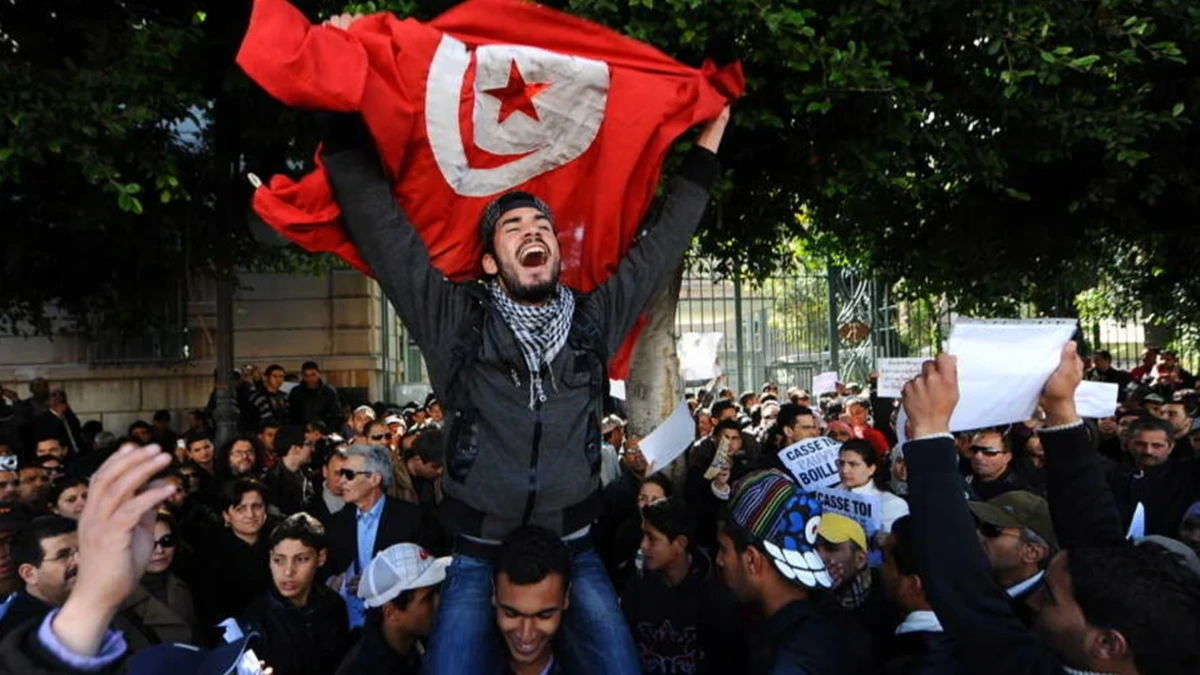

When discussing the Arab Spring, I always feel that the events that began in 2010–2011 were not just a series of protests, but a social explosion that had been waiting to happen for a long time. The wave of demonstrations that spread from Tunisia to Egypt, Libya, Yemen and Syria took the world by surprise, but if we look at the conditions of society before that, it all seems like an accumulation of anger that could no longer be contained.
For me, the Arab Spring is a symbol of a society that had been oppressed for too long, deprived of its basic rights, and finally found the right moment and medium to fight back.
Before this revolution spread, Arab countries were in a state of near-identical political conditions authoritarian rule, limited civil liberties, repressive state apparatus, and rampant corruption. Power was concentrated in the hands of a small elite, while the needs of the people were often ignored.
When I read about these conditions, it was clear that society was living in a very unequal reality, as if the state was not working for the people, but rather the people were working to support the rulers’ power.
The economic situation was no better. High unemployment, especially among young people, made opportunities in life increasingly scarce. Many educated young people were unable to find decent work despite having qualifications. Social inequality became more pronounced as wealth remained within the same circles, creating a gap that widened year after year. To me, this situation is like a time bomb waiting for a small spark to explode.
That spark came from a tragic act the self-immolation of Mohamed Bouazizi, a Tunisian street vendor who was desperate because of the corrupt treatment he received from state officials. When I read Bouazizi’s story, it was very easy to understand why his actions sparked national outrage.
He was humiliated, beaten, oppressed, and had his goods confiscated simply because he was unable to pay bribes. Bouazizi was not a politician, nor an activist, but he became a symbol of the structural suffering experienced by millions of people in the region.
When his body burned, the collective anger of the people ignited at the same time. However, what interests me is that the Arab Spring was not only born out of social discontent, but also from the emergence of a new space that had never been fully controlled by the social media regime.
For the first time in the region’s history, citizens found a place where their voices could not be easily silenced. Social media provided a relatively free, fast, and difficult-to-control alternative space that conventional media could not offer at the time.
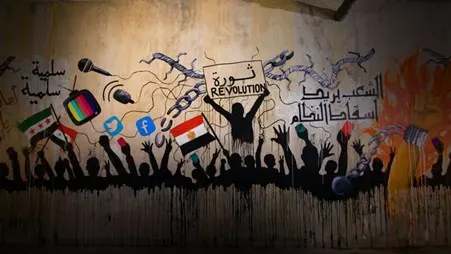
This is what made the Arab Spring different from previous waves of protest Facebook, Twitter, and YouTube were not just entertainment platforms or places to share news with friends.
They became highly effective tools of resistance. If I had to describe it, social media became a non-violent ‘weapon’ that was far more deadly to authoritarian regimes because it undermined power from the most sensitive source of information.
The primary function of social media is mobilisation. In conditions where the regime attempts to control the movement of the people, the ability to disseminate information quickly becomes key. Activists can convey the location of demonstrations, changes in strategy, and even warnings about the presence of the authorities in a matter of seconds.
This information spreads like wildfire, crossing boundaries that were previously difficult to penetrate. In my opinion, this is why large demonstrations can occur almost simultaneously in various cities, and even other countries can be inspired within a matter of days.
The second very important function is documentation through citizen journalism. Before the era of social media, regimes could control the narrative. However, during the Arab Spring, citizens were able to directly record everything that happened from peaceful demonstrations to violence by the authorities. These videos and photos then spread widely, becoming undeniable evidence.
This documentation has tremendous emotional power because it shows reality without filters. When the world watched on their mobile screens as the authorities beat demonstrators or fired tear gas into crowds, international sympathy grew. I see this as the greatest moral force of the movement a truth that is difficult to fabricate.
The third function is that social media enables the coordination of movements without a single leader. This is the aspect that makes the movement difficult to break. No single figure can be arrested to stop the resistance.
Activists work in networks, not structures. With communication conducted through closed groups or encrypted messages, strategies can be devised quickly and flexibly. From my point of view, this model is very effective in dealing with authoritarian regimes that are accustomed to silencing movements by intimidating their leaders.
However, although social media provided many benefits to the Arab Spring movement, I do not see it as the sole factor. Social media did not create public discontent; it merely accelerated the spread of that discontent. The major changes that occurred would not have been possible if the people did not have strong reasons to fight back.
Therefore, I see social media as a catalyst, not the cause of the revolution itself. It is worth noting that social media can accelerate the collapse of a regime, but it does not automatically create new stability. Many countries that experienced the Arab Spring actually entered a new phase of conflict or long-term political instability.
For example, Libya and Syria became prolonged battlefields. This means that even though the people succeeded in overthrowing the rulers, building a post-revolutionary state is a far more complex challenge. Social media can indeed unite the people in resistance, but it is not enough to unite them in the process of political reconstruction.
Even so, I still believe that the Arab Spring was an important milestone in contemporary history. It showed how change can occur when people find their voice. For me, what happened in Tunisia, Egypt and other countries shows that power is no longer absolute when people have access to digital space. Social media became a tool to challenge the official narrative, dismantle propaganda and build solidarity across countries.
When protesters in Egypt posted their images online and people in Yemen or Syria saw them, a sense emerged that their struggles were interconnected. There was a new awareness that the injustices they experienced were not local issues, but regional ones. For me, this is the greatest strength of the Arab Spring the birth of a previously unheard-of digital solidarity.
Ultimately, I see the Arab Spring as a moment when people found new ways to demand justice. They no longer relied solely on political parties, traditional media, or specific groups. They used mobile phones, cameras, and social networks to express themselves. And although many countries are still struggling for stability today, the Arab Spring reminds us that power built on fear will not last forever.
Author: Nabila Rafa Abida (07041182328150)
International Relations Student, Sriwijaya University
References
Al Jazeera. (2020, December 17). What is the Arab Spring, and how did it start? Al Jazeera and News Agencies. https://www.aljazeera.com/news/2020/12/17/what-is-the-arab-spring-and-how-did-it-start
Umar, Ahmad. R. M., Darmawan, A. B., Sufa, F. S., & Ndadari, G. L. (2016). Media Sosial dan Revolusi Politik: Memahami Kembali Fenomena “Arab Spring” dalam Perspektif Ruang Publik Transnasional. Jurnal Ilmu Sosial Dan Ilmu Politik, 18(2), 114. https://doi.org/10.22146/jsp.13130
Zulkarnen. (2017). Budaya Timur Tengah Pasca Arab Spring (Analisis Deskriptif Budaya Arab).
AL-AZHAR INDONESIA SERI HUMANIORA, 4.
https://dx.doi.org/10.36722/sh.v4i2.260
Editor: Salwa Alifah Yusrina
Bahasa: Rahmat Al Kafi

⚡ Baca Lebih Cepat Artikel MMI di Ponsel Anda!
Ikuti Channel WhatsApp
Media Mahasiswa Indonesia (MMI):
KLIK DI SINI