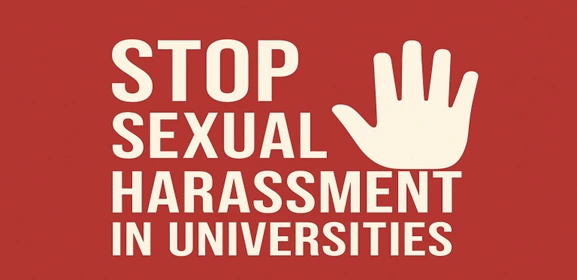

A university should be the safest place for every student to learn and grow. However, for many women, that space has become unsafe—a place where their bodies and voices are not always heard.
Behind the walls of campus buildings and academic seminars, a culture still persists that forces women to be more cautious about how they dress, behave, and speak. This raises an important question: who is the university truly protecting—the victims or the perpetrators?
The ongoing cases of sexual harassment within higher education institutions are not a new issue. According to records from the Ministry of Education, Culture, Research, and Technology (Kemendikbudristek) in 2023, there were at least 65 reported cases of sexual violence in universities across Indonesia, with only a small number being fully resolved.
The majority of victims were female students, while most perpetrators were lecturers or senior students. Ironically, campus harassment cases often do not end with the act itself but continue in the form of silence.
Victims who dare to speak up are frequently accused of “tarnishing the university’s reputation” or being “disrespectful for accusing a lecturer.” This issue is often described as the tip of the iceberg — although many cases are reported, there are still countless victims who choose to remain silent.
Many of them ultimately choose silence due to stigma, shame, threats, and unequal power relations. Here, power operates not only as male dominance over women but also as the structural power of institutions over truth itself.
Furthermore, the culture of seniority and patriarchy within academia often disguises harassment as acts of closeness, guidance, or even jokes. A lecturer patting a student’s shoulder is seen as normal, or a senior inviting a new student out “to mentor” is considered harmless.
Yet, the line between guidance and harassment is often blurred, leaving victims haunted by unspoken fear. Education should be a space of liberation, but in reality, many women are still learning to be cautious. In classrooms, women are often positioned as those who must protect themselves, rather than those who are protected by the institution.
Supporting data and facts from Komnas Perempuan (the National Commission on Violence Against Women) also show an increase in reports within educational settings, with 82 cases recorded between 2021 and 2024—universities being the institutions with the highest numbers.
Ironically, even though the government claims that 100% of public universities have established PPKS (Task Forces for the Prevention and Handling of Sexual Violence), their effectiveness remains questionable, as many cases still go unresolved.
In my opinion, harassment in the academic environment is not merely a matter of individual morality, but a reflection of unequal power structures.
The solution to addressing cases of sexual harassment in higher education, particularly against female students, begins with more than just the government establishing PPKS (Sexual Violence Prevention and Handling Task Forces) in universities.
Campuses must also strengthen systems for preventing and reporting sexual violence—systems that are accessible, confidential, and victim-centered.
Baca Juga: Analisis HAM di Lingkungan Perguruan Tinggi terhadap Kasus Pelecehan/ Kekerasan Seksual
Restoring the true function of universities as safe spaces for all students, especially women, requires concrete actions that address the root causes—not just the formation of task forces or the repetition of anti-violence slogans.
Secondly, every report must be handled by an independent and trained team, not merely by campus bureaucratic bodies that are vulnerable to conflicts of interest.
Thirdly, transparency in case handling must be upheld. Universities should publish annual reports detailing the number, types, and follow-ups of sexual violence cases—without revealing the victim’s identities.
Furthermore, the government and the academic community must strengthen the oversight function of PPKS Task Forces, ensuring not only their existence on paper but also that they have sufficient funding, authority, and clear legal protection.
Finally, a cultural shift within campuses is essential—from a culture of silence and victim-blaming to one that listens to, respects, and protects women’s voices. A university should be a safe space for learning, not a place where women must remain on guard against harassment.
As long as the culture of silence and power imbalance persists, justice will remain an illusion. It is time for campuses to truly stand with victims and make women’s voices the center of change.
Penulis: Salsa Bililah
Mahasiswa Akuntansi Sektor Publik Universitas Harkat Negeri Tegal
Editor: Ika Ayuni Lestari
Bahasa: Rahmat Al Kafi
Ikuti berita terbaru Media Mahasiswa Indonesia di Google News

⚡ Baca Lebih Cepat Artikel MMI di Ponsel Anda!
Ikuti Channel WhatsApp
Media Mahasiswa Indonesia (MMI):
KLIK DI SINI