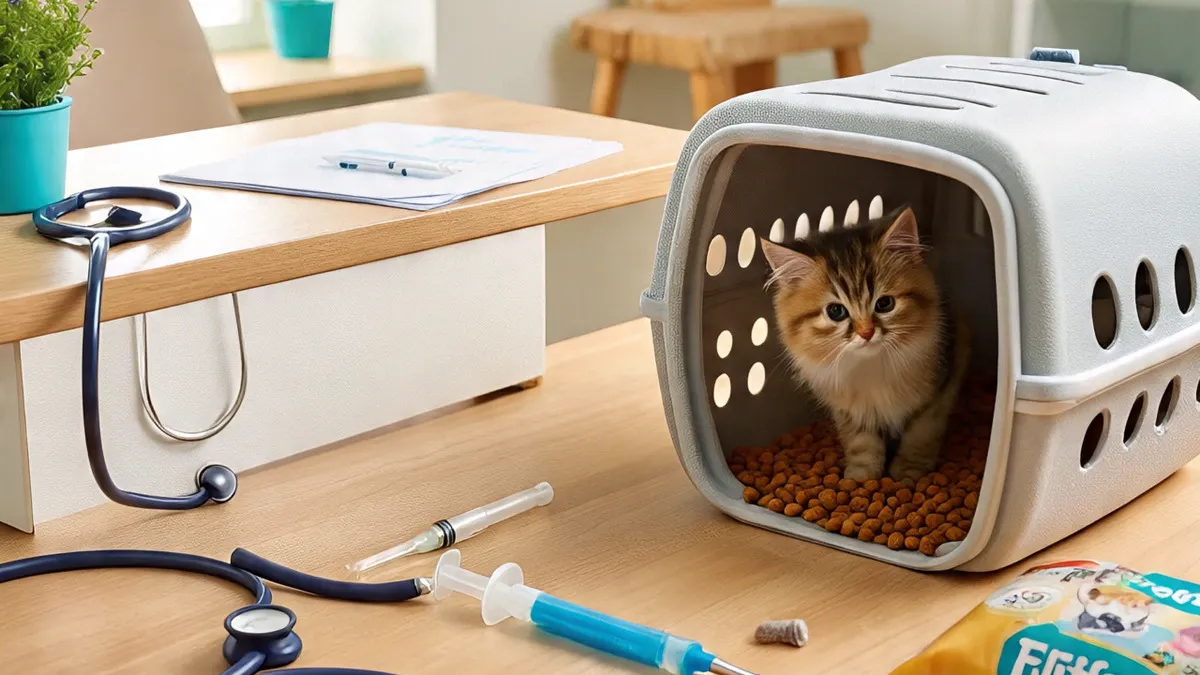

A pet owner waits anxiously in a clinic, eyes fixed on the veterinarian, hoping for reassurance. In moments like these, medical knowledge alone is not enough, communication becomes the real healer.
In healthcare, whether for humans or animals, the ability to explain, listen, and empathize directly influences trust, cooperation, and treatment outcomes.
During a field trip to the Universitas Airlangga Animal Hospital (UNAIR RSH), I had the opportunity to observe how communication shapes the patient-care process in veterinary medicine.
The experience revealed that treating animals also means effectively communicating with the humans who care for them.
Health communication is often associated with human healthcare, yet in veterinary medicine, it becomes even more complex because the patient cannot speak for themselves.
Veterinarians must rely on pet owners to describe symptoms accurately while simultaneously managing emotions, expectations, and misunderstandings.
According to global health communication principles, unclear communication can lead to poor treatment adherence, emotional distress, and mistrust.
These challenges are amplified in animal healthcare, where owners may act out of fear, worry, or love, sometimes struggling to fully absorb clinical details.
When we arrived at UNAIR Animal Hospital, communication was already at work before any medical interaction took place.
The clean, organized environment, clear signboards, and warm greetings from staff created a sense of safety and professionalism.
These non-verbal signals play a crucial role in shaping first impressions. For a worried pet owner, walking into a structured and calm environment helps reduce anxiety even before speaking to a doctor.
One of the most meaningful observations was how veterinarians communicated medical information.
Instead of using complex terminology, they explained conditions in simple language. For example, rather than saying “dermatological inflammation,” they said, “Your cat’s skin is irritated and may be reacting to something like an allergy.”
This shift from clinical vocabulary to everyday wording prevented confusion and empowered pet owners to understand what was happening.
Misunderstandings caused by medical jargon are common in health services, and pets, like human patients, depend on their caregivers to follow instructions correctly. Clear communication, therefore, becomes a form of treatment itself.
Equally impactful was the emotional awareness shown by the veterinarians. Many pet owners spoke with visible concern, some repeating questions, others sounding tense or uncertain.
Rather than rushing through explanations, the veterinarians practiced therapeutic communication: listening attentively, acknowledging emotions, and responding calmly.
One veterinarian reassured an anxious owner by saying, “I understand this is scary to hear, but we will take it step by step.”
That moment reflected something powerful, medical conversations are not only about transferring information, but also about offering emotional support.
Communication at UNAIR was not limited to face-to-face consultations. Posters, charts, and infographics around the hospital educated visitors about pet vaccination schedules, hygiene practices, and disease prevention.
This form of visual public health communication ensures that information reaches even those who might be hesitant to ask questions.
It transforms the hospital from a treatment center into a shared learning space for the community.
While the hospital demonstrated strong communication practices, further improvements can always be made.
Healthcare providers, including veterinarians, can continue minimizing jargon, strengthening emotional communication training, and using more visual aids such as treatment roadmaps or medication guides.
Allowing brief moments to confirm understanding such as politely asking owners to repeat instructions can also prevent treatment errors.
Most importantly, patience and empathy should remain a core part of every interaction, especially when emotions are heightened.
For me, this field trip was more than an academic requirement, it was a confirmation of the kind of veterinarian I want to become.
Seeing how veterinarians balanced clinical knowledge with compassion reshaped my understanding of animal healthcare.
I realized that healing is not only scientific, it is human. Even though animals are the patients, their caregivers need equal reassurance, guidance, and emotional support.
The professionalism I witnessed at UNAIR inspired me to develop not just medical competence in the future, but also strong interpersonal communication skills.
Ultimately, effective healthcare is built on connection, clarity, and care. The observations from UNAIR Animal Hospital showed that communication barriers, whether caused by anxiety, medical terminology, or lack of understanding can be overcome with empathy, simple language, and patient engagement.
The experience reinforced a fundamental truth: the best healthcare professionals are not only those who treat illness, but those who communicate with kindness and purpose.
This visit left me motivated, grateful, and more determined than ever to pursue veterinary medicine with both knowledge and heart.
Penulis: Reenuga Devi
Student of Veterinary Medicine Program, Universitas Airlangga
Editor: Siti Sajidah El-Zahra
Bahasa: Rahmat Al Kafi

⚡ Baca Lebih Cepat Artikel MMI di Ponsel Anda!
Ikuti Channel WhatsApp
Media Mahasiswa Indonesia (MMI):
KLIK DI SINI